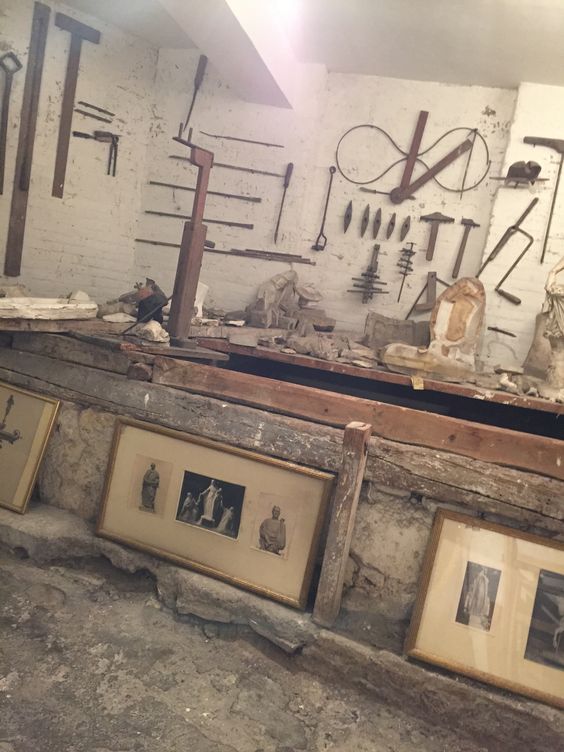
Thursday, February 9, 2017

DMC: "She hears from her creative voice" by Tabatha Yeatts


She hears from her creative voice

The other voices—loud and grim—
clamor so I can't come in—

They draw your eye, confound your ear,
make me feel unwelcome here.

My steps are light, my scent is slight—
I come to you most every night

in dreams you might remember when
you exile the others and let me in.


© 2017 Tabatha Yeatts. All rights reserved.


Jeannine Atkins has challenged us to write a poem that uses personified feeling. For more details, click HERE. Jeannine offers the following guidance to those feeling stuck:
"Maybe start with a character in motion and think of her main feeling. Then let her or him speak to Joy, Anxiety, Peaceful Nature, Curiosity, Grief, etc to set a dialog back and forth. Or here's a prompt: Happiness, where are you? — let Happiness answer."

Post your poem on our February 2017 padlet.  All contributions will be included in a wrap-up celebration on Friday, February 24th, and one lucky participant will win a personalized copy of her latest novel-in-verse from Atheneum Books/Simon & Schuster:


Wednesday, February 8, 2017

DMC: "Resolute" by Linda Mitchell


RESOLUTE

A ballerina watches
a photographer
set up tripod and camera
near the window.
He hunts, she thinks.
Each move, every glance
measured light,
hushed selection
of prey.
The music stops
and Señora claps sharp.
Dancers line up
for portraits,
one by one against
the weather-beaten wall.
And now her,
the prize shot.
Obediently she steps
into position,
bringing her braids
forward, a deer
in a sun-dappled forest.
The ballerina, however,
escapes falling prey
to simmering clicks
of his camera.
No resigned smile,
no first position
or plié
no giving away
her dance inside.


© 2017 Linda Mitchell. All rights reserved.


Jeannine Atkins has challenged us to write a poem that uses personified feeling. For more details, click HERE. Jeannine offers the following guidance to those feeling stuck: 
"Maybe start with a character in motion and think of her main feeling. Then let her or him speak to Joy, Anxiety, Peaceful Nature, Curiosity, Grief, etc to set a dialog back and forth. Or here's a prompt: Happiness, where are you? — let Happiness answer."

Post your poem on our February 2017 padlet.  All contributions will be included in a wrap-up celebration on Friday, February 24th, and one lucky participant will win a personalized copy of her latest novel-in-verse from Atheneum Books/Simon & Schuster:


Tuesday, February 7, 2017

DMC: "Fear" by Sherry Howard


FEAR

Fear chilled his being,
tap-danced across
locked memories,
threatened to drag
them to the surface
where they would 
bounce and react,
a nuclear fusion.

© 2017 Sherry Howard. All rights reserved.


Jeannine Atkins has challenged us to write a poem that uses personified feeling. For more details, click HERE. Jeannine offers the following guidance to those feeling stuck: 
"Maybe start with a character in motion and think of her main feeling. Then let her or him speak to Joy, Anxiety, Peaceful Nature, Curiosity, Grief, etc to set a dialog back and forth. Or here's a prompt: Happiness, where are you? — let Happiness answer."

Post your poem on our February 2017 padlet.  All contributions will be included in a wrap-up celebration on Friday, February 24th, and one lucky participant will win a personalized copy of her latest novel-in-verse from Atheneum Books/Simon & Schuster:


Monday, February 6, 2017

DMC: "Concern" by Cindy Breedlove


CONCERN

Concern wrinkles its forehead.
It silently whispers a prayer.
Giving a hug and listening,
it’s helping me fight Despair.


© 2017 Cindy Breedlove. All rights reserved.


Jeannine Atkins has challenged us to write a poem that uses personified feeling. For more details, click HERE. Jeannine offers the following guidance to those feeling stuck: 
"Maybe start with a character in motion and think of her main feeling. Then let her or him speak to Joy, Anxiety, Peaceful Nature, Curiosity, Grief, etc to set a dialog back and forth. Or here's a prompt: Happiness, where are you? — let Happiness answer."

Post your poem on our February 2017 padlet.  All contributions will be included in a wrap-up celebration on Friday, February 24th, and one lucky participant will win a personalized copy of her latest novel-in-verse from Atheneum Books/Simon & Schuster:


Thursday, February 2, 2017

Spotlight on Jeannine Atkins + DMC Challenge


JEANNINE ATKINS

Jeannine Atkins is the author of several picture books, chapter books, and novels for young readers, about courageous women who forge ahead in their lives and careers despite formidable odds and personal sacrifice. She has distinguished herself as a critically acclaimed poet with her biographical novels-in-verse Borrowed Names: Poems About Laura Ingalls Wilder, Madam C. J. Walker, Marie Curie, and Their Daughters (Henry Holt & Co., 2010), Finding Wonders: Three Girls Who Changed Science (Atheneum Books/Simon & Schuster, 2016), and her latest, Stone Mirrors: The Sculpture and Silence of Edmonia Lewis (Atheneum Books/Simon & Schuster, 2017).

When she's not writing, Jeannine teaches children's literature at the University of Massachusetts Amherst and writing at Simmons College. As much as I'd love to sit in on her classes, I learn plenty just by following Jeannine's blog Views from a Window Seat.  In 2013, I was fortunate to win a copy of Views from a Window Seat: Thoughts on Writing and Life (reviewed HERE) and have been a huge fan of her work ever since. You can find out more about all of Jeannine's books, including resources for students and educators, at her website.

STONE MIRRORS:
The Sculpture and Silence of Edmonia Lewis

Atheneum Books for Young Readers, January 10, 2017
ISBN: 978-1481459051
Find at Amazon, Barnes & Noble, or via Indiebound.org.
There was a time I would have been reluctant to review Stone Mirrors on Today's Little Ditty. Intended for readers twelve and up, it does have some disturbing content that makes it less than "ditty-like." But among the changes I've decided to embrace this year is the tide of verse novels that has been building momentum and taking the kidlit world by storm. I'm ready to dive in and take Today's Little Ditty with me. Of course I'll continue to feature poetry collections and rhyming picture books as well, but if Today's Little Ditty is going to thrive, it needs to reflect my interests and explore new directions.

I was truly captivated by Stone Mirrors. Apparently, so were Kirkus and Booklist who both gave Stone Mirrors starred reviews. It's the powerful and inspiring story of Edmonia Lewis—a woman of African-Haitian and Native American (Ojibwe) descent, who is presented with the opportunity to study at a newly interracial Oberlin College during the Civil War years. While there, she is accused of attempted murder, subjected to a violent attack, and later accused of theft and forced to leave one semester short of graduation. Incredibly, she goes on to eventually become an eminent sculptor living in Rome, though not without carrying the scars and ghosts of her past with her.

Quoted in "Letter From L. Maria Child,"
National Anti-Slavery Standard, 27 Feb. 1864

One of the things I love most about Jeannine Atkins's work is the respectful way she shines light on lesser known women in history. The records of Edmonia Lewis's life are scant at best, but Jeannine ensures that they are not lost altogether. While keeping to the facts of real events, through rigorous research and empathic imagining, she pulls out details and emotion—filling in the gaps with an entirely credible rendering. What's more, there's something about the way Jeannine writes that grabs hold of more than just your imagination. Her work engages the reader not only in story, but like other sensuous art forms, her books remain memorable on a visceral level long after you put them down.

Take a look at this opening poem from Stone Mirrors:

Forbidden

Old branches crack as Edmonia breaks
a path through the woods. She wants
to outrun fury, or at least make a distance
between herself and the poison spoken
at Oberlin. The school is a shop where she can't buy,
a supper she's never meant to taste,
a holiday she can't celebrate
though she doesn't want to be left out.

She runs under trees taller than those in town,
where they're sawed into lumber,
turned into tables, rifles, or walls.
These woods are as close to home
as she may ever again get.
When she was given a chance to go
to boarding school, her aunts' farewell was final.
People who move into houses
with hard walls don't return to homes
that can be rolled and carried on backs.

Edmonia crouches to touch tracks
of birds and swift squirrels sculpted in snow,
the split hearts of deer hooves.
Boot prints are set far enough apart 
to tell her the trespasser is tall,
shallow enough to guess he's slender.
Her cold breath stops, like ice.
She looks up at a deer whose dark gaze
binds them, turns into trust.
Then a branch breaks. The deer flees.

                              From Stone Mirrors: The Sculpture and Silence of Edmonia Lewis, 
                              by Jeannine Atkins (Atheneum Books/Simon & Schuster, 2017)
                              Used with permission.


See what I mean? There are several themes and images here that echo throughout the book—cracking and breaking, a desire for belonging, poison, ice, home, trust... I could go on. But even in this one selection, you can experience the grip of poetry and the pull of story. As Jeannine describes it,
Verse narratives can be the perfect way to use poetry's precision along with the wondering of "What happens next? And then?"

Uncovering mysteries may be what Jeannine does best, but now it's time to crack open the mystery that is Jeannine Atkins, author and poet. We'll begin, as always, with five favorites.


Favorite childhood memory:  
          Trees: climbing, playing or reading underneath.

Favorite subject in school:
          English was kind to me. I was a fan of diagramming sentences.

Favorite teacher in school:  
          Mrs. Shaw, my fourth grade teacher, because she once held my hand
          walking down the corridor.
Jeannine Atkins and Kirby

Favorite pastime:  
          Walking my dog where he can be 
          unleashed.

Favorite children’s poet:
          Marilyn Nelson and Karen Hesse have
          been inspirational.


What drives you to write books for young readers and what aspect(s) of your career do you enjoy the most?

Young readers can be so passionate. Who wouldn’t want readers who might slip your book under their pillows?  I like learning about the past, but while I read some bulky biographies and history books, I prefer forms that touch the past more lightly. Verse lets me use both facts and imagination.

A young fan gives Jeannine a picture of a princess scientist!


You do a tremendous amount of research before sitting down to write. For Finding Wonders: Three Girls Who Changed Science, you researched for a year and wrote for an additional two. What was your experience like for Stone Mirrors? How do you know when it’s time to pull yourself away from the research phase and start writing?

I spent about fifteen years, off and on, researching and writing Stone Mirrors. It just takes a lot of time, so I choose subjects I love for the long haul.

Edmonia Lewis
National Portrait Gallery, Smithsonian Institution

I first wrote about Edmonia Lewis in prose, as a historical novel. I realized I could do more with the imagery in verse, but it still took me years to get it right. After each of the many rejections, I tried again to show why I thought this was a life that needed to be known. It helps to be stubborn.


Beyond the care you put into research, the lyrical language and evocative imagery in your verse novels is extraordinary. Jane Yolen has said that when she writes, she begins as a poet. She doesn’t make a distinction between prose and poetry until later in the process when she goes back to make sure she has properly addressed character, plot, etc. You, on the other hand, have said “…except for occasional lucky accidents, most of the poetry comes late in the process.” I find this so intriguing! Does this mean that you consider your affinity with poetry something learned rather than something that comes naturally?

When I first read your question, I thought: I must have it wrong! I’d like to follow Jane Yolen’s path, and let a poem crystallize around a few right words. Then I remembered we all have our process, and these can keep changing. Most of my inspiration comes from history, so I read through a lot of generally un-poetic pages in search of imagery that strikes me, scenes I might expand into a poem, and a general arc for a series of poems. Once I have those bigger patterns, I play with imagery and listen for rhythms and sounds.
To me it’s like spreading lots of paint on paper, and only then focusing on each square inch or so, trying to get each spot to look just so.
I guess that means the poetry is learned or that it comes with lots of patient looking. The pleasure is that with each day’s work of cutting a path through many wrong words, I get to see something shinier emerge from a sprawl.

Photo: Debra Paulson


What inspired you to tell Edmonia Lewis's story?

I like writing about artists, because that might be a path I’d have taken if not for choosing writing. Also, like her, my life was shaped partly by a sense of not being able to talk about things that I knew were tremendously important.
Much of my writing begins with reading about a strong woman who makes me think:
                       Why had I never heard of her?
I admired Edmonia Lewis’s courage, but needed to also show her fear. Like the marble she sculpted, both fear and courage can be broken.

Edmonia Lewis, The Death of Cleopatra (1876)
Smithsonian American Art Museum, photo: Jeannine Atkins

In an author’s note at the end of the novel you explain,
(Mary) Edmonia Lewis (c. 1844-1907) never spoke or wrote much about her past, and some of the stories that have come down through time are vague or contradictory.... I imagined my way into a vision of what might have been, the way a sculptor of historical figures starts with givens but creates her own vision.
With no clear-cut map to follow, were there points in the writing of this novel that you felt unsure about the direction you were taking? If so, how did you get past that insecurity?

There were so many points where I felt uncertain! I always come back to the small details of a life such as the sculpting tools she would have used and the meals she likely ate. Small sensory details often can set my direction.

for more details of Edmonia's life and work.


Please share a favorite passage from Stone Mirrors and tell us why it’s meaningful to you.
The past changes every time we look back.

… History is not only caught 

in vaults or glass cases, but is what’s shoved aside

or deliberately left out: The letter left within the pages

of a book, what was whispered over cake or soup.

This sums up why I write, looking for the common moments that can reveal what’s crucial.


Jeannine (L) with her grandmere and sister.
In an interview with Sylvia Vardell, you say "it’s [a] joy to introduce young readers to women who pursued their dreams. Reading can show us we’re never alone.” What role models or books have shaped who you are today?

I write about people from the past because biographies and historical fiction was my favorite reading as a girl. I didn’t make much distinction between fact and fiction, and found alternate homes for myself with Louisa May Alcott’s March family, Harriet the Spy, Joan of Arc, Virginia Dare, and Abigail Adams.


What’s coming up next for you?

I just finished a novel for middle readers with a bit of magic in it.    

                       —So tantalizing!

If you had all the world’s children in one room, what would you tell them?

I’d go with most anything that Mr. Rogers has said.

Read more Fred Rogers quotes at Goodreads.


Finally, what have you chosen as this month’s ditty challenge?

Like most of us, Edmonia Lewis tries to avoid painful memories, but she also makes an art of memorializing people in statues. As I thought about the conflicting forces of memory in her life, it seemed memory had a life of its own. I personified Memory.


Here’s an example from Stone Mirrors:
She pulls away,

skids through a puddle, meaning to escape

Memory, who creeps through the dark,

but pounces in broad daylight, too.

… Memory can find her anywhere.

So here’s your challenge! Decide on an important feeling for a character, then let that be external. Maybe your character will have a conversation with personified feeling such as Joy, Fear, Anger, or Gratitude. Or maybe you will write about the personified feeling in some other way. Even if the personification drops out in a later draft, I bet you’ll have clarified the feeling!


How intriguing!

Please keep in mind that your poem can take any form, including lyrical prose. But if you do go with prose, please limit your passage to fewer than 200 words.

Won't you join me in thanking Jeannine Atkins for this wonderful interview?
And while you're at it, thank her for offering a personalized copy of Stone Mirrors: The Sculpture and Silence of Edmonia Lewis to one lucky DMC participant chosen randomly at the end of the month—HURRAY!


HOW TO PARTICIPATE:

Post a poem that uses personified feeling on our February 2017 padlet. Stop by any time during the month to add your work or to check out what others are contributing.

By posting on the padlet, you are granting me permission to share your poem on Today's Little Ditty.  Some poems will be featured as daily ditties, though authors may not be given advanced notice. Subscribe to the blog if you'd like to keep tabs. You can do that in the sidebar to the right where it says "Follow TLD by Email." As always, all of the poems will be included in a wrap-up celebration on the last Friday of the month—February 24th for our current challenge.

TEACHERS, it's great when students get involved! Ditty of the Month Club challenges are wonderful opportunities to learn about working poets and authors while having fun with poetry prompts. Thank you for spreading the word! For children under 13, please read my COPPA compliance statement in the sidebar to the right.

FIRST-TIMERS (those who have never contributed to a ditty challenge before), in addition to posting your work on the padlet, please send your name and email address to TodaysLittleDitty (at) gmail (dot) com. That way I'll be able to contact you for possible inclusion in future Best of Today's Little Ditty anthologies.

BLOGGERS, thank you for publishing your poems on your own blogs– I love that!  Please also remember to include your poem (or a direct link to your post) on the padlet in order to be included in the wrap-up celebration and end-of-month giveaway.


Now sharpen your chisels and pencils, folks, it's time to create! 


* * * * * * * * * * * * * * * * * * * * * * * * * *


Many thanks to everyone who contributed a tercet and made me feel so hopeful last week! The winners of copies of HERE WE GO: A Poetry Friday Power Book by Sylvia Vardell and Janet Wong (Pomelo Books, 2017) are:

Vezenimost
Rosi Hollinbeck
Jan Godown Annino
Maria Marshall
and Carol Varsalona

Congratulations to all!


For this week's Poetry Friday roundup, please join Penny Parker Klostermann, my most favorite dragon-keeper, at A Penny and Her Jots. 


Thursday, January 26, 2017

Planting the seeds: HERE WE GO (Giveaway!)


Pasco County Schools

Last week I talked a lot about "here we are"—bracing for and embracing change. Judging by your comments and several other Poetry Friday posts, I am not the only one who has been grappling with uncertainty, looking for answers, or turning to poetry to soothe and settle mind and heart.

Today I'm sharing something that might help...

Available for purchase at Amazon and QEP.

A "hot off the press" Children's Book Council selection for 2017, this may not be the first time you've heard about HERE WE GO, released by Pomelo Books earlier this month. It wouldn't be difficult to write my whole post by borrowing bits and pieces from others: I thought Mary Lee Hahn was spot on when she called it "the right book at the right time," Irene Latham was her usual perceptive self when she said it "invites questions and doesn't demand answers," and Margaret Simon did a great job writing about the "grit" and determination it takes to put yourself out there—something required of every activist. But since this is my internet podium, allow me tell you what this book means to me (aside from the fact that I'm pleased as all get out to be a part of it!) . . .

HERE WE GO is a harbinger of hope.


Sylvia Vardell and Janet Wong impress the heck out of me.
They're always right on the pulse of where we are as a poetry
and teaching community, and ready to urge us one step further.

From its introduction:
Why is this a "Poetry Friday Power Book"? Because we believe in the power of poetry to express our deepest feelings, and our most powerful experiences, and to inspire us to use our words to create change in the world.

Like its predecessor, YOU JUST WAIT (reviewed here last September), HERE WE GO is a mash-up between an anthology, a verse novella, and a poetry workbook. It also comes with an abundance of useful back matter. But what I love most is the interactive "PowerPack" format that guides readers through the process of reading, thinking, writing, and responding. It's a winning formula for writers of any age and ability to spur creativity, make connections, and get their own words and ideas flowing.

Aimed at slightly younger readers than YOU JUST WAIT, Janet hopes that HERE WE GO "will find its way into the hands of 3rd graders who have been confused or fearful since the election and that it will give them comfort and security to read about kids like themselves." (Read more at Live Your Poem.)

Perfect for home or classroom, I like to think of HERE WE GO as the little engine that could. Without being preachy, it helps young readers recognize that they have a voice and gives them the confidence to make a difference, to make to the world a better place.

The story centers on four young friends—Ameera, David, Jack, and Jenna. They come from diverse backgrounds and each face unique challenges at home, but together they discover that kindness, gardening, and activism go hand-in-hand as they strive to make an impact in their community. Young readers will see that no matter their family situation or the socio-political climate, they are not alone. We all have struggles, yet it's our differences that make us stronger when we work together.


Pasco County Schools


I love with what Janet and Sylvia did with PowerPack 8.
It opens with a PowerPlay activity that asks the reader to circle every third word in a passage and then, using some of those words, come up with a three-line poem—a tercet.

—from Here We Go: A Poetry Friday Power Book
by Sylvia Vardell and Janet Wong ©2017 Pomelo Books


Next is my poem, "Look for the Helpers," which originally appeared in THE POETRY FRIDAY ANTHOLOGY FOR CELEBRATIONS.

—from Here We Go: A Poetry Friday Power Book
by Sylvia Vardell and Janet Wong ©2017 Pomelo Books


After that, we have two original poems by Janet Wong—
a response poem...

—from Here We Go: A Poetry Friday Power Book
by Sylvia Vardell and Janet Wong ©2017 Pomelo Books
  
Don't you love that ending?

and a mentor poem—

—from Here We Go: A Poetry Friday Power Book
by Sylvia Vardell and Janet Wong ©2017 Pomelo Books

"There's only room for kindness here"—YES!


followed by a Power2You writing prompt.
Now it's your turn to write a poem using rhyming or non-rhyming tercets.

—from Here We Go: A Poetry Friday Power Book
by Sylvia Vardell and Janet Wong ©2017 Pomelo Books


If you accept this Power2You challenge . . .

Write a short poem about HOPE or HELPING using tercets (one or two stanzas is plenty) and I will share it here. Leave your poem in the comments below or email it to TodaysLittleDitty (at) gmail (dot) com. Since you've already read my poem about helping, I'll start us off with a tercet about hope.

dawn chill
lack of will
still the moon smiles

© Michelle Heidenrich Barnes


each morning
the sun behind clouds
I choose hope

© Jone Rush MacCulloch


the snow
falls in silence but
the wind listens

© Brenda Davis Harsham


It’s hard to see hope in the headlines,
but then at the playground
I find children smiling.

© Linda Baie


rocks propped
each surface jigsawed together
a tower of hope

© Bridget Magee


in my mind
I can see past the clouds
to the sun

© Elizabeth Steinglass


We're growing spinach, lettuce, beans,
we're planting hope with every seed,
our garden swells with pride and leaves.

© Buffy Silverman


one kind word
wields more action
and ignites more change!

© Michelle Kogan


Gray paints the sky.
Silence quietly enters.
Hope pushes through the solitude.

© Carol Varsalona 


when I'm ready to quit
my daughter's smile
renews my hope.

 © Maria Marshall


I look to nature
A wild heron sees me
What are you doing here?

© Margaret G. Simon


The job is boring.
Time goes slow.
Tomorrow is Saturday!

© Cindy Breedlove


Winter wind sings
a song that gently chimes
through falling snow

© Kay McGriff


there are no alternative facts;
the sky IS blue
and a smile changes the world

© Sally Murphy


I remind myself
every single day:
to teach is to hope.

© Mary Lee Hahn


Urgent call: Attention, attention!
Volunteer your kindness, love, and care
for a global hatred decontamination.

© vezenimost


the volunteer stretches
stretches beyond to reach out to another
another less strong

© Donna JT Smith


Rain has cleared
sunshine here
world full of rainbow

© Joy Acey


When my legs grow too tired to stand,
I can still pull myself up
with my arms.

© David McMullin


Helpers here, helpers there
Multiply like bunnies
Erase the fear

© Jan Godown Annino


Janet and Sylvia are two of the most generous people I know, and not surprisingly, they have provided me with several copies of HERE WE GO to give away to readers of this blog post. 

This is the perfect book to share with a a young person in your life—a child, grandchild, niece or nephew, your students, a scouting troop, an after-school group...? Or maybe you'd like a copy just for yourself. That's okay too! As we did last time, you may request 1, 2, or 3 copies, but you must leave a comment on this post no later than Tuesday, January 31st, in order to be entered. You do NOT have to write a tercet poem in order to be entered—that's just for fun—though I am curious about how you plan to use the books. (For those who have trouble leaving comments, email me at TodaysLittleDitty (at) gmail (dot) com and I will post your comment for you.) Winners will be chosen randomly until all the copies are gone, and announced next Friday, February 3rd.


One last thought . . .

Sometimes it's hard to see beyond the daily news and our own busy lives, but just to put things in perspective, today (January 27) is Holocaust Remembrance Day. My mother-in-law was an Auschwitz survivor and a remarkable woman in so many ways. I'd love to share some of her inspiring personal stories with you, but that's a post for another day. In the meantime, let's be grateful for having learned from mistakes of the past and unite in our determination not to let them happen again.

Plant seeds of love, not hate.

Pasco County Schools


Carol Varsalona is all about planting seeds of love and gratitude. Join her for today's Poetry Friday roundup at Beyond LiteracyLink.


Thursday, January 19, 2017

Embracing (and bracing for) Change


"Imperial" by Evonne

CHAIR LIFT
          by Maxine W. Kumin  
Nobody holds your hand up there.
You sit alone in your moving chair

It's not as smooth as an elevator.
It's scarier than an escalator.

Under your feet, the snowy humps
Of hills go by with jerks and bumps

And the only sound in the world is the clack
Of the chair lift clanking along its track.
                                                                                       Read the rest HERE. 
From OPENING DAYS: SPORTS  POEMS, selected by Lee Bennett Hopkins (Harcourt Brace & Company, 1996).


The metaphoric chair lift has been clickety-clackety-clanking for many months now. My anxiety has been climbing as well. Now that we've reached the summit, I try to take in the grandeur and possibility of 2017, but I'm distracted by the daunting slope.

I've never been much of a skier. My introduction to downhill skiing was a weekend trip with a group of teenagers, mostly older than myself, all of whom already knew how to ski. The first morning was great—beautiful weather, I had a newbie lesson and mastered the bunny slope. But the afternoon brought sleet and an intermediate run that was well beyond what this bunny could handle. What I remember most was the trail of blue dye that followed me down the mountainside, sliding down on my bottom in brand new jeans. It would have been embarrassing had I not been paralyzed by fear. And yes, I probably could have taken my skis off and walked, but that would have been far too sensible. The second day I feigned illness and had the house all to myself. Far more sensible.

So here we are. As much as I might like to stay home and ignore the challenges ahead, it's not an option. I'm not sure what's on the horizon—politically, creatively, personally. I've got two teens of my own navigating the landscape. Whatever the future holds, it feels big and new and definitely scarier than an escalator.

                    My head is telling me to hold on. 

                                        My heart is urging me to let go.

But first it means heading back to the bunny slope for a refresher course. It means building up my core and balance, and trusting that the chaos I'm feeling right now is exactly where I need to be. To open myself up for something beautiful and extraordinary, though I'm not sure what and when and how. At first I thought my "one little word" for 2017 would be self-love. But then I realized it's not. It's change. Self-love is the means to embrace that change. I've got a new pair of jeans packed and ready for the trip. If you see a trail of blue, make sure to wave.


Photo: Andre Charland


Here's some GREAT news to start off the new year... a new Poetry Friday Power Book by Sylvia Vardell and Janet Wong that's a Children's Book Council "Hot Off the Press” selection for January 2017!  I'm honored have my poem "Look for the Helpers" included in HERE WE GO.  Next week I'll have an in-depth look and a power-packed giveaway.


After that, we'll return to our regularly scheduled programming.  So sharpen your pencils, poets—the Ditty of the Month Club will be back on February 3rd! In the meantime, please visit Laura Purdie Salas at Writing the World for Kids. She's done a wonderful write-up of The Best of Today's Little Ditty, including three poems from the anthology. Thank you, Laura!


Thanks to Violet Nesdoly for hosting this week's Poetry Friday roundup with a post that is perfect for today.