Showing posts with label Renée LaTulippe. Show all posts

Wednesday, October 24, 2018

DMC: "Pencil and Pen: A Composed Love Story" by Renée M. LaTulippe


Calef Brown has challenged us to write a poem that tells the story of two anthropomorphized objects. They can be an odd couple, close friends, mortal enemies, or meet each other for the first time. The poem can be about an adventure they have together, a conflict, a game they play, anything. Click HERE for more details and to read this month's Spotlight ON interview.

Post your poem on our October 2018 padlet by October 31st. While some contributions will be featured as daily ditties, all contributions will be included in a wrap-up presentation on Friday, November 2nd, and one lucky participant will win a signed copy of Calef Brown's latest collection of ghoulish poetry from Carolrhoda Books:


Monday, August 22, 2016

DMC: "AMBUSH!" by Renée M. LaTulippe


AMBUSH!

Beneath the cotton-checkered skies,
the hilltop blazed with fiery cries:

“Friends, you know we must arise.
if we’re to win the battle prize.
Open up your compound eyes.
We’re better than those gnats and flies.
Gather up your war supplies.
Bifurcate those tunnels, guys!
A sneak attack! Send in the spies!
Let’s fight as one! Let’s colonize!”

The soldiers seized the apple pies.
They marched off with the chicken thighs.
The hilltop rang with hungry cries.

The rest is history — ant-size.


© 2013 Renée M. LaTulippe. All rights reserved.


Diana Murray has challenged us to write a poem about an unlikely hero this month. Click HERE for more details.

Post your poem on our August 2016 padlet. All contributions will be included in a wrap-up celebration this Friday, August 26th, and one lucky participant will win a personalized copy of her fun new picture book from Roaring Brook Press:


Thursday, August 20, 2015

Renée M. LaTulippe – Diction Is King: A Lyrical Language Revision Tip


Writer's Day by tihmoller and Andre F. Muller on DeviantArt


Revising your manuscript can seem like a ravenous dragon set loose in your fairy tale village. 
Just ask Janie Lazo, Sandy Lowe, Kathleen Mazurowski, or Joy Acey, whose couplets were featured this week for Penny Parker Klostermann's DMC challenge.

From the belly of the dragon, Renée LaTulippe shares a revision tip that may save your manuscript's life.


This is Renée's fourth TLD contributor post, shedding light on her 5-week online course, The Lyrical Language Lab: Punching Up Prose with Poetry.  Her next available class begins on October 26th.

Thanks as always, Renée, for sharing your insights on Today's Little Ditty!


Diction Is King: A Lyrical Language Revision Tip
by Renée M. LaTulippe

In one of my previous posts, Mood, Effect, and Emotion: Sentence Transformation, we looked at the properties of sound and how sound can transform your text.
   
Today, in the last of the “lyrical language basics” posts, we’re going to take that a step further and talk about diction, aka word choice, and how you can punch up your text during revision. Does your text feel listless? Is it suffering from a general malaise? Then it probably needs a shot of poetry—in the form of specific diction—to get it on its feet again.

If you’ve been a writer for five minutes, you have no doubt heard that your choice of verbs can make or break your text. In a nutshell:


You can find a sea of information on verbs on the Internet, so I won't go into them in more detail—because verbs aren’t the only words that need a good shakedown during revision.

The right choice of adjectives and nouns can help you show your story and reveal your characters as well as any verb. The trick is to be specific and choose loaded words—that is, words that are loaded with image, tone, and emotion.


I like to do a little exercise with my students called “unwriting,” which is when I take a small section of a text and replace all the verbs, nouns, and adjectives with run-of-the-mill choices. This exercise helps illuminate the importance of diction and how the right words can do so much of our storytelling work for us.

Let’s look at this sample from a prose picture book, which I have unwritten and then put back together. Note how the choice of specific nouns and adjectives transforms the writing.


So what’s going on here? Let’s analyze it:

  • There are no adverbs in this passage. In the entire book I found only about eight, but most are unobtrusive or interesting, like generally, particularly, and brilliantly.

  • The name Wilfred creates a more specific image of the main character, whereas the name Tom is neutral. Based on the name and the other language in this short passage, how do you imagine Wilfred?

  • The names Marcel and Rodrigo are specific and funny, especially for a moose. Mark and Robert are fine names for everyday life, but if you’re going to get a moose, you might as well give him a name with pizzazz. The names also fit the overall tone of the book and the personality of the main character. Wilfred would not settle for a moose named Mark.

  • Look at the adjectivesdumbstruck, mistaken, only proper. What does this type of language reveal about the main character? How do these choices reinforce the image you formed based solely on his name? How much more weight does dumbstruck carry vs. surprised? How are wrong and mistaken different in tone?

  • The use of old lady instead of woman reveals how Wilfred feels about this intruder, this pretender to the affections of his moose. She’s not just a lady, she’s an old lady who was mistaken!

  • Even in this short snippet you can see that Jeffers opted for more elevated language than one usually finds in a picture book. Through his diction, the author creates a main character who doesn’t get upset, but rather takes umbrage at perceived wrongs. This is a sophisticated MC with discerning tastes and a well-defined personality.

  • Other words and phrases that contribute to this tone include generally ignored, particularly poor, maintaining a certain proximity, terrible discovery, discussed their plans, ruled out…options, perilous situations, reached a compromise, and my favorite line in the book, Embarrassed and enraged, Wilfred rushed off for home. 

This is Wilfred. He’s the one in the bowtie and suspenders. Is he anything like you imagined him?

from THIS MOOSE BELONGS TO ME by Oliver Jeffers (click to enlarge)

Give it a try!

Go through your manuscript and highlight, in two different colors, all your nouns and adjectives, and then analyze them. Are they the best, most specific choices you can make for your story and your characters? 

In the next lyrical language post, we’ll look at the revision process via some before-and-after examples. Until then, happy writing!

* * * * *

Copyright © 2015 Renée M. LaTulippe. This article is partially excerpted from lessons in the online course The Lyrical Language Lab: Punching Up Prose with Poetry. All rights reserved.

* * * * *

Would you like some more sneak peeks into The Lyrical Language Lab lessons? Check out Renée’s other posts on Today’s Little Ditty:

Sound Bites: Making Writing Musical
Mood, Effect, and Emotion: Sentence Transformation    
What Dodo Birds Can Teach Is About Meter


An editor and writer, Renée LaTulippe has co-authored nine early readers and a collection of poetry titled Lizard Lou: a collection of rhymes old and new (Moonbeam Children’s Book Award) and has poems in several editions of The Poetry Friday Anthology. She developed and teaches the online course The Lyrical Language Lab: Punching Up Prose with Poetry and blogs on children’s poetry at NoWaterRiver.com.


Dragon's not the only one who knows where to find scrumptious poetry. Join Catherine at Reading to the Core for this week's Poetry Friday roundup.


Wednesday, May 6, 2015

DMC: "Lemon" by Renée M. LaTulippe


LEMON

Lemon is a sunny yellow word.
It speaks of summer,
days sliced thin and swirled
with sugar nights.
I halve one,
squeeze
a stinging spray,
raise the rind to my lips
for a sour-pucker kiss,
my hands perfumed with happiness.

© 2015 Renée M. LaTulippe. All rights reserved.


Nikki Grimes has challenged us to try a wordplay exercise this month and create our own free verse poems. Click HERE for all the details.

Send your poem to TodaysLittleDitty (at) gmail (dot) com, or use the contact form in the sidebar to the right. All contributions will be included in a wrap-up celebration on Friday, May 29th, and one lucky participant will win a personalized copy of Nikki's brand new picture book:


Thursday, April 16, 2015

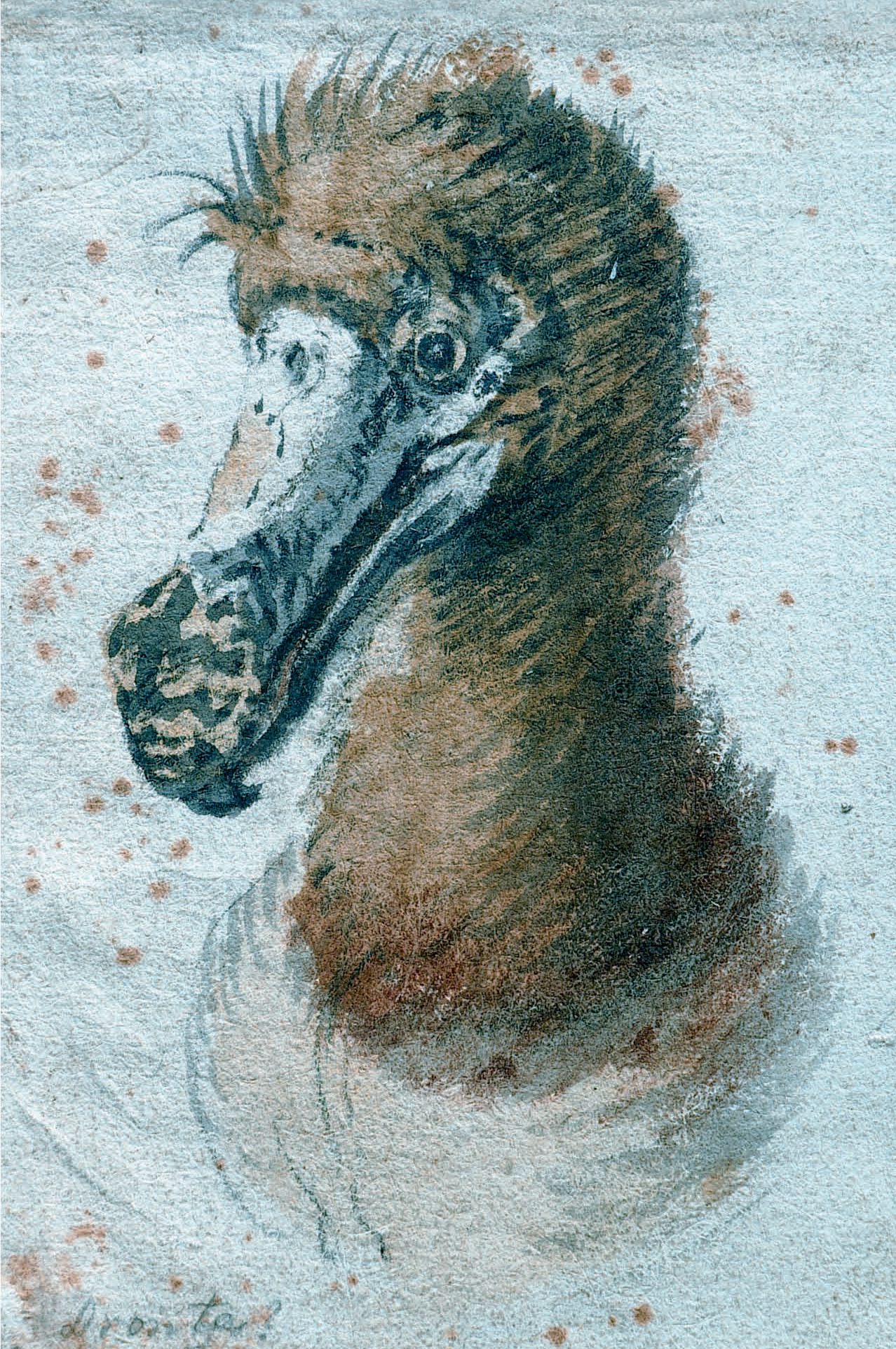
Renée M. LaTulippe: What Dodo Birds Can Teach Us about Meter


Dodo head by Cornelius Saftleven, public domain
Source: Wikimedia

Confession: sometimes when I read my first drafts, I feel like a big ol' dodohead.

If that's true for you, too, you might feel better after reading today's post by TLD Contributor Renée LaTulippe.

Take it from Robyn Campbell:

I want to sing verse like Renée
she treats you to a lyrical buffet
her poetry's a golden chain
in relation mine gives tummy pain.

© 2015 Robyn Campbell. All rights reserved.

                                                                                                                       * Surprise, Renée! *

Yes, there IS a clerihew for every occasion!
Believe it or not, our Ditty of the Month Club wrap-up is NEXT FRIDAY. Let's see if we can knock Kwame Alexander's socks off.  You can find details on how to participate HERE. Our featured clerihews this week were by LeeAnn Blankenship, Tabatha Yeatts, Rosi Hollinbeck, and yours truly.

Now, about those dodo birds.... 


* * * * * * * * * * * * * * * * * * * * * * * * * * * * * * * *


What Dodo Birds Can Teach Us about Meter

One of the questions I’m often asked by students is whether monosyllabic words can be either stressed or unstressed in a line of verse.

That one is easy to answer: yes. 

All words have ONE primary stressed syllable. Look at these words:

PAN-cakes           re-VIEW           hi-BIS-cus         CON-tra-ry

If that is so, and it is, then it stands to reason that monosyllabic words consist of one stressed syllable. But when put into a line of metered verse, the placement will decide whether the word is stressed or unstressed within the context of the line.

Let’s take the word baked and see how the stress changes when used in different positions in the same meter.

iambic:  
  • she BAKED a THOU-sand COOK-ies
  • she CAN’T bake ALL those COOK-ies

dactylic:
  • THOU-sands of COOK-ies baked OUT in the SUN
  • THOU-sands of COOK-ies have BAKED in the SUN  

You could continue this exercise for other meters, too.

The same is true for multisyllabic words: it all depends on position. Take the word never. All by itself, it is a trochaic word: NEV-er.

But in this dactylic line, it would work as two unstressed syllables:

BOB nev-er SAT on a TACK in his LIFE

Stressed syllables are just like real estate: location, location, location. The important thing is that you don't mess with the stress. That is, you don’t force a stress where it shouldn’t go, as in this iambic line:

will BOB sit ON a TACK? nev-ER!

We just can’t make people say nev-ER, and that’s that.

I’ve also had students think that if a word is naturally trochaic (or iambic, dactylic, anapestic), then it can only be used in that meter – so the word never could only be used in trochaic meter. As we see from the dactylic line above, this is not so. Location, location, location.

I’ll leave you with a few more examples of how a word or phrase can work in any meter if you get the placement just right. Please welcome my lovely assistant, the elusive dodo bird.

Here it is in dactyl form:

Frederick William Frohawk, 1905. Public domain. Source: Wikimedia

And here iambic:

Edwards' Dodo, Roelant Savery, 1626. Public domain. Source: Wikimedia

And here anapestic:

Frederick William Frohawk, 1907. Public domain. Source: Wikimedia

And here trochaic:

Hugh Edwin Strickland, 1848. Public domain. Source: Wikimedia

Give it a try!

Write a line of verse in each of the four major meters using one of the following words (or one of your own). Feel free to share your lines in the comments.

chocolate           sneeze               carousel               resent               bench


© 2015 Renée M. LaTulippe. All rights reserved.

Read more of Renée's posts on Today's Little Ditty:

An editor and writer, Renée LaTulippe has co-authored nine early readers and a collection of poetry titled Lizard Lou: a collection of rhymes old and new (Moonbeam Children’s Book Award) and has poems in several editions of The Poetry Friday Anthology. She developed and teaches the online course The Lyrical Language Lab: Punching Up Prose with Poetry and blogs on children’s poetry at NoWaterRiver.com.


Today's Poetry Friday roundup is being hosted by the fabulously talented Robyn Hood Black. (I wonder if she's ever had a dodohead moment?) You can find her at Life on the Deckle Edge.


Looking for creative ways to celebrate National Poetry Month? Jama Rattigan is your go-to for NPM festivites at Alphabet Soup.


Thursday, November 13, 2014

Renée LaTulippe – Mood, Effect, and Emotion: Sentence Transformation


Photo: M. H. Barnes

All aboard!!!
Renée LaTulippe's Lyrical Language Express is about to leave the station, and trust me, you don't want to miss it!

* * * * * * * * * * * * * * * * * * * * * * * * * * * * * * * *

Mood, Effect, and Emotion: Sentence Transformation

In my last lyrical language post, “Sound Bites: Making Writing Musical,” we looked at the properties of sounds in the English language and how we can use them to enhance our writing. In this post, we’re going to put those ideas into practice with a little writing exercise. 

A heightened awareness of sound and the knowledge of how to use sounds in your writing has several benefits:
  1. Style: It takes your writing from humdrum to engaging.
  2. Tone: It helps you set the tone of your poem or story from the very first line.
  3. Mood/Emotion: It helps you elicit specific emotions or reactions in your reader.
  4. Scene: It helps you show setting or character without "telling."
  5. Pacing: It gives you more control over the dynamics and pacing of your writing (when and where to change tone, mood, or pacing, for example).

Let's look at those five points a bit closer. Suppose I want to write a story about a train. I start with this first line:

Photo: Wikimedia Commons, Geof Sheppard
  1. Style: This humdrum sentence uses everyday language that doesn't engage. There is no craft to it.
  2. Tone: No particular tone has been set. I'm not sure what to expect.
  3. Mood/Emotion: I have no emotional reaction to this sentence.
  4. Scene: It tells me nothing about the character or setting.
  5. Pacing: The sentence is neutral in terms of pacing.

Using sound devices, I could put several different spins on the train idea.

Photo: Wikimedia Commons, Albert Jankowski (public domain)
  1. Style: The language is engaging and fun to say out loud.
  2. Tone: The tone is light-hearted. The consonance on the CK and T and the assonance on the short I create an upbeat rhythm.
  3. Mood/Emotion: The train seems happy and therefore elicits a feeling of happiness and excitement in me.
  4. Scene: I can feel the jaunty movement of the bouncing train. The word rickety and the way the train moves makes me think he's not in the best repair but that he's okay with his lot in life. I know he's on an old track, which is also rickety, so I have some clue to setting.
  5. Pacing: The CK, T, and short I are sounds that are spoken quickly and naturally speed up the pacing. The sentence forces me to read it quickly.

Since not all sounds have the same properties or produce the same effects, I could focus the assonance and consonance on different letters and see what happens.

Photo: Flikr Creative Commons, David Spigolon
  1. Style: The language is engaging and fun to say out loud.
  2. Tone: The tone is heavier. The assonance on the short U combined with the consonance on the DGE and G sounds weigh this sentence down. The line is broken up a bit by the two short A-CK sounds in the slant rhyme fractured track, which is not a soothing phrase at all.
  3. Mood/Emotion: Gus the train seems sad or tired. I might worry a bit and wonder why he feels this way. I hope he'll find a happy ending or a good night's sleep wherever he is going. (And if he does, the writer will need to pay attention to the sounds as the story goes from heavy and sad to light and happy.)
  4. Scene: The character is clearly down in the dumps and is leaving a town. Is it his home? The track is broken. Maybe the town is run-down too? Maybe there's no work left? Maybe he's leaving loved ones behind as he goes in search of new possibilities?
  5. Pacing: The short U, DGE, G, CH, and even the TR are heavier in the mouth and spoken more slowly, so the pacing is slower in this version.

This story could also take a lyrical turn by playing more with assonance, alliteration, and voiced sounds.

Photo: Wikimedia Commons, Geof Sheppard
  1. Style: The language is musical and pleasing to say out loud.
  2. Tone: The tone is pensive. The assonance on the long O and OO sounds combines with the consonance on the voiced M and N to create a moan that lingers throughout the sentence and conveys a mournful mood. I would expect this to be a sad story, too, though completely different in tone and style than the story about Gus.
  3. Mood/Emotion: Rather than make me sad, all those mournful sounds make me curious and suspenseful. This could even be a scary story.
  4. Scene: I'm not sure if the character is the locomotive or the night or the shadows or the moon or none of the above, but I would like to find out. Since there are shadows and moonlight, I picture this train going through the woods. I may be wrong, but the phrase at least puts images in my head.
  5. Pacing: The assonance on the long O and OO sounds gives the phrase a languid pace and encourages the reader to linger over the sentence.

The number of transformations this sentence could undergo to create different effects is limited only by our imagination. But I hope these three examples will give you a good idea of how we can choose and manipulate specific sounds to add music to our poetry and prose.

Of course, diction (word choice) plays a significant role in these transformations as well, and we'll be talking about that in a later post. But sound and diction go hand in hand as we must consider sound when choosing which words to use.


Give it a try!

Take the first sentence in a work in progress or a line from a poem and put it through the transformation test. Or use this sentence: Birds took to the sky and flew south for the winter. Feel free to share your transformations in the comments.

In the next lyrical language post, a flock of dodo birds will show us how to manage our stress(ed beats). Until then, happy writing!


© 2014 Renée M. LaTulippe. This article is partially excerpted from a lesson in the online course The Lyrical Language Lab: Punching Up Prose with Poetry. All rights reserved.


An editor and writer, Renée LaTulippe has co-authored nine early readers and a collection of poetry titled Lizard Lou: a collection of rhymes old and new (Moonbeam Children’s Book Award) and has poems in several editions of The Poetry Friday Anthology. She developed and teaches the online course The Lyrical Language Lab: Punching Up Prose with Poetry and blogs on children’s poetry at NoWaterRiver.com.


* * * * * * * * * * * * * * * * * * * * * * * * * * * * * * * *

If you read last week's spotlight interview with Bob Raczka, you know that he's challenged us to write monster-inspired haiku this month.  This week's daily ditties included haiku by Tabatha Yeatts, Joyce Ray, and Donna Smith. Stay tuned... there's more to come!

I'm also delighted to share some good news. I've had two poems selected for The Poetry Friday Anthology for Celebrations (Pomelo Books), edited by Sylvia Vardell and Janet Wong. Keep your eyes peeled for this newest edition of the Poetry Friday Anthology series coming in April 2015.

Poetry Friday is being hosted today by Keri Collins Lewis at Keri Recommends.  Please join her as she pays tribute to someone very special.


Thursday, August 14, 2014

Renée M. LaTulippe: Sound Bites–Making Writing Musical


Dear TLD:

I suffer from weak prose, writer's fatigue, restless adverb syndrome, and imagination constipation.  Is there a doctor in the house?!!

Sincerely,
Depressed Writer

Well yes, DW, you're in luck!  It's my pleasure to introduce lyrical language doctor and TLD contributor:

Renée M. LaTulippe

Renée has co-authored nine early readers and a collection of poetry titled Lizard Lou: a collection of rhymes old and new (Moonbeam Children’s Book Award) for All About Learning Press, where she is also the editor, and has poems in The Poetry Friday Anthology, Middle School and Science editions. She developed and teaches the online course The Lyrical Language Lab: Punching Up Prose with Poetry and creates children’s poetry videos for her blog NoWaterRiver.com. Renée holds theater and English education degrees from Marymount Manhattan College and New York University, and taught English and theater in NYC before moving to Italy, where she lives with her husband and twin boys.

I have heard nothing but high praise from writers who have taken Renée's Lyrical Language Lab online course, including this recent glowing review from Linda Kulp and this fabulous interview by Julie Hedlund. It's really no surprise given Renée's background and the fact that her own writing sings like an Italian operetta.  How grateful am I that Renée has chosen to share excerpts from her lessons right here? Molto grato! Thank you for being here today, Renée. The stage is all yours.

- - - - - - - - - - - - - - - - - - - - - - - - - - - - - - - -

Because children's poetry and picture books are meant to be read aloud, it's imperative that we make the reading experience as pleasurable and memorable as possible whether in rhyme or in prose. Luckily, we have plenty of tools to help us do just that, and one of the most important is sound.

I like to consider rhythm and meter as the musical staff (the base structure) upon which to compose the rest of the music (sound devices).


Like musical notes, words and sounds can be combined, clustered, and juxtaposed to elicit specific emotions. Most of us have studied sound devices at one point or another, so I’ll start with a quick review and short examples of what some of these devices are all about, and then take it a step further to look at some properties of sound.

Sound Devices

Alliteration...

is the repetition of initial sounds in a series of words. It occurs in stressed syllables and often produces a light and humorous effect.

Timothy Tompkins had turnips and tea. (Karla Kuskin, from Moon, Have You Met My Mother?)

I am the pirate's parrot, / a bird both brave and bold (Anonymous)


Consonance...

is the repetition of internal or ending consonant sounds in a series of words, especially in stressed syllables. Consonance can create pleasing rhythmic effects or subtle instances of slant rhyme.

First a hush and down / it crashes / over curbs it swishes (Marci Ridlon)

Wistful, she recalls the past and all the hours lost


Assonance...

is the repetition of internal or ending vowel sounds in a series of words, especially in stressed syllables. Assonance is helpful in creating mood.

And miles to go before I sleep. (Robert Frost, “Stopping By Woods on a Snowy Evening”)

I am sitting in the middle / of a rather muddy puddle (Dennis Lee, “The Muddy Puddle”)
  • Notice the difference in mood created by the length of the vowel sounds. In the Robert Frost example, all the vowels are long or drawn out, which slows the reader down and emphasizes the long journey the narrator must still undertake. In the Dennis Lee example, all the vowels are short, which gives the line a snappier, more staccato beat that carries it forward.

Onomatopoeia...

is a figure of speech in which the sound of a word mimics the sense of the word itself.

I'm the hummer of summer / so busy with buzz. (Douglas Florian, from UnBEElievables)

The coals pip-pop and the wind doesn't stop. (Karma Wilson, from Bear Snores On)


Repetition...

is the repeating of a word or phrase several times for emphasis. Repetition of longer sections, like a stanza in a narrative poem or picture book, is called a refrain. 

As of someone gently rapping, rapping at my chamber door. (E.A. Poe, “The Raven”)

A gruffalo? What's a gruffalo? / A gruffalo–why, didn't you know? (Julia Donaldson - repeated refrain in The Gruffalo)

But the bear snores on. (Karma Wilson - repeated refrain in Bear Snores On)


You can open any book of poetry and find examples of all these sound devices. Here’s a poem that wears all its jewelry at once, but to good effect. Read “Open Hydrant” out loud, taking note of how the sound devices affect your reading and the meaning of the poem.


Now let’s look more closely at some properties of sound.

Length and Weight

The English language has 26 letters that can be combined to create 44 sounds. I'm not going to get into phonetics, but it is helpful to be aware of two basic properties of these sounds.

The length of a sound is how long it takes to say the sound or how long the sound can be held. Length can play a big part in pacing. Read the following blue words out loud and consider how the sounds differ in effect and tone.
  • Long vowel sounds:   sway       creep       bright       moan       glue
    • Long vowels often slow the pacing and have a heavier tone.
  • Short vowel sounds:   brat      jet       wiggle        scoff          dug
    • Short vowels often quicken the pacing and have a more light-hearted tone.
  • Consonant sounds that can be held (known as fricative and sibilant sounds): dge, f, h, j, l, m, n, ph, r, s, sh, th, th (voiced) v, z, zh
    • ridge   fish    hurry   jelly    hill    hum    nine    phone   furry    hiss    shame    forever    crash   thief     then   buzz     vision
  •  Consonant sounds that cannot be held (known as plosive sounds): b, ck, d, g, p, qu, t, w, x, y
    • bag    click   dawn    gripe    pup    quick   taut    wicked   box   yes  

The weight of a word is the feeling of heaviness or lightness in the mouth when you speak it. Read the following blue word pairs out loud. Which word in each pair feels heavier for you? Why?
  • tap    /    tug
  • trudge    /    scuttle
  • whimper    /    moan
  • bench    /    sofa
  • axe    /    lathe

Of course no one consciously stops to think about all these nitty-gritty details in the midst of writing, but being aware that these properties exist will help you
  • train your ear for sound;
  • choose the best words for your purpose;
  • discern exactly where the problem is in a clunky verse or sentence.

I’ll leave you with one more poem that makes gleeful use of those short vowels and heavy D sounds. Everyone in the puddle!


In the next lyrical language post, I’ll look at how sound can help us heighten the musicality of prose so we can create an endless range of mood, effect, and emotion. Until then, happy writing!

© 2014 Renée M. LaTulippe. This article is partially excerpted from a lesson in the online course The Lyrical Language Lab: Punching Up Prose with Poetry. All rights reserved.

- - - - - - - - - - - - - - - - - - - - - - - - - - - - - - - -

Pretty great, huh?  If you like what you just read, consider signing up for Renée's next available Lyrical Language class this coming October!

In the meantime, here it is the middle of August and Farmer McPeeper shows absolutely no signs of waking.  Lori Degman and I challenge you to put your newfound sound skills to the test right now!  Click HERE for more information about this month's ditty challenge, or for some examples, check out the featured contributions so far (an interesting assortment of farm animals, I dare say) by my daughter Miranda, Bridget Magee, and Buffy Silverman.  My own musical attempt to wake Farmer McPeeper will be coming this Tuesday.

Heidi Mordhorst is hosting summer's last fling and today's Poetry Friday roundup at my juicy little universe.


Thursday, April 10, 2014

Birthday Bash + Poetry Friday Roundup


The Very Hungry Caterpillar Cake via Craftsy member SweetandSwanky

Welcome to my birthday bash!

Amazing.  My blog baby, Today's Little Ditty, turned one year old this week.  I appreciate you dropping by to help me celebrate!  We'll get the party started with a round of mini-golf, then some special announcements, and wrap things up with cake and the Poetry Friday roundup.


Over the past twelve months, I have posted 35 original poems here.  Some of them have gotten lots of attention, others not so much.  Today I'm taking the opportunity to re-post one of my lesser-viewed favorites. "Golf Day" was originally posted on September 20, 2013.  (I've included the link just in case you want to see the oh-so-cute photos of my munchkins... now significantly more teen-like.  Sigh.)

 
          Golf Day

          I pick a club that’s just my size
          and ball so bright it hurts my eyes,
          then place it on the perfect spot
          to give that ball a great big swat!

          Swing once… a miss.
          Swing twice… just air.
          The third time, with a bit more care…

          Going
                        going
                                      going…

                                                    THWACK!
                                                It hits the wall,
                                       starts
                        rolling
          back.

          Oh no you don’t!
          I won’t be beat.
          Don’t need the club,
          I’ll use my feet
          to kick
                        and chase you
                                                  to the hole…

                                                                           At last
                                                                           that ball
                                                                           drops

                                                                           i
                                                                           n

                                                                           t
                                                                           h
                                                                           e

                                                                           bowl.

          My da says, “That’s not how it’s done,”
          but he’s just sore because I won.

          © 2013 Michelle Heidenrich Barnes.  All rights reserved.


http://commons.wikimedia.org/wiki/File:Ice_Cream_Sundae.jpg

Speaking of bowls, is it time for ice cream yet?

No, not yet.  But it is time for some delicious announcements!  When I debuted Today's Little Ditty on April 10, 2013, I had no idea of the wild and wonderful year in store, nor the special relationships I'd make along the way.  I did, however, have a pretty clear vision of what I wanted this blog to become.  Sure, I wanted a place to showcase my own work, but more than that, I wanted it to be a fun community playground of sorts.  That's why I introduced Haiku Garden, Limerick Alley, and Five For Friday parties like last week's poetry celebration.  Now I'd like to take Today's Little Ditty three steps further in that direction. 


Please help me welcome my new team of contributors to Today's Little Ditty!

Lyrical Language Doctor
A Class Act
Science Sleuth
Rhyme Crime Investigator

I'm not sure how well this Fab Four can sing, but for those of us who consistently strive to improve our craft, I'm thrilled to be able to learn from Renée LaTulippe, Laura Shovan, Buffy Silverman, and Carrie Clickard.  Like jimmies on ice cream, contributor posts will be sprinkled throughout the year; each of these fabulous poets writing in a specific area of expertise. (Make mine mint chocolate chip, please.)


 Next, for those who are sweet on a fun poetry challenge, I'm thrilled to introduce:

The Ditty of the Month Club!  

Design: Miranda Barnes

This is a club for anyone and everyone.  (Even my kids are excited to join in.)  Each month, we will be given a new poetry challenge– a theme and/or form to write our own poems.  Several may be featured as daily ditties, but all of them will be collected in one wrap-up post at the end of the month.  Holy smokes, it's DITTYMANIA!   But wait, there's more... who do you suppose is going to come up with these challenges?  Nope, not me.


On the first Friday of every month, the Ditty of the Month Club will open with a new

*Spotlight ON* interview series!  


Here, I will be interviewing authors, anthologists, editors, agents... whoever I can get my hands on in the business of children's publishing.  These are the folks who will be coming up with the month's ditty challenge.  Sometimes, they may even have a special goodie to offer as a reward at the end of the month.   How cool is that?!!

Are you, or is someone you know, an author or anthologist with a book coming out this year?  Or maybe you know of an editor or agent who might find it fun to take part in the Spotlight ON series?  Send me an email by using the contact form in the sidebar to the right.  The spotlighted author for May is already lined up, but I can't give away ALL my surprises today, now can I?

Many, many thanks to all of you who will be helping my birthday wishes take flight over the next year!    

Cake, anyone?

And now here's my gift to you: the Poetry Friday roundup!

Leave your direct link and a few words to describe your post in the comments and I will add them here throughout the day.

1. Robyn is showcasing a wonderful young poet, Liana Kiln, in her Haiku Student Poet of the Month series at Life on the Deckle Edge.

2. At Author Amok, Laura Shovan's "Source Poems" series continues with guest blogger Mary Bargteil's allegiance to T.S. Eliot's FOUR QUARTETS.

3. Elizabeth Steinglass treats us to an uncommon view of a violet– just one of many treasures she is exploring in her "Backyard Treasures" series this month.

4. Myra celebrates diversity and the voices of the silenced with Langston Hughes' poem, "I Dream a World" at Gathering Books.

5. At Buffy's Blog, Buffy shares an original poem inspired by a predatory encounter in her suburban neighborhood.

6. Diane's trio for us today includes puppet poems and a little music at Random Noodling; New Hampshire poet, Richard Eberhart, and an excellent Poetry Month slideshow presentation at Kurious Kitty's Kurio Kabinet; and a quote by Eberhart at KK's Kwotes.

7. Matt is is with a fun, original poem at Radio, Rhythm & Rhyme, and check out all the other events he'll be participating in this month as well.

8. At Tapestry of Words, Becky is celebrating her favorite poets this month.  Today she focuses on Christina Rossetti.

9. Linda Baie at Teacherdance has been wandering into the realm of haiku.  She shares an original haiku from something she saw on the way home one day.

10. Join Bridget at wee words for wee ones for an original and hilarious take on an overprotective mom and a daredevil kid.

11. Over at The Poem Farm today, Amy has "Suitcase," #11 in her series of original THRIFT STORE poems.

12. Violet Nesdoly has written an array of punny poems in response to a Homophoem Poetry Stretch challenge.

13. Catherine shares a beauty of a poem by William Wordsworth, "I Wandered Lonely As a Cloud," at Reading to the Core.  Catherine has also started a blog for parents, Mrs. Flynn's Literacy Corner, where today she discusses the importance of sharing Mother Goose rhymes with little ones.

14. Join Lorie Ann at On Point for an original haiku, "Dancing on the Volcano." (Something for the bucket list, perhaps?)  At readertotz, Lorie Ann reviews PRESTO CHANGE-O! A BOOK OF ANIMAL MAGIC.

15. Tabatha shares poems by Diane Mayr and Megan Arkenberg as part of her wonderful "Directory of Imaginary Poems" series at The Opposite of Indifference.

16. Stop by Charles Waters Poetry to catch up with Charles' goings on and to read his original poem, "Aerial Beauty."

17. At my juicy little universe, Heidi visits the Progressive Poem for another entry in her National Poetry Month Travel Journal. 

18. Mary Lee's poetry travels have taken her to the CN Tower.  You can find her "Our Wonderful World" poem-a-day Poetry Month Project at A Year of Reading.

19. At Reflections on the Teche, Margaret offers an answer to the question, "Why Poetry?" using an interesting slideshow format and she also takes a different spin on an I am From poem.

20. Tamera Will Wissinger features a call for children's poetry submissions and an original book spine poem she created for Travis Jonker’s book spine poem gallery.

21. Irene is in today with some wise words from Paul Janeckzo and a look at FIREFLY JULY over at Live Your Poem.

22. Laura Purdie Salas' "riddle-ku" series continues at Writing the World for Kids.

23. Linda Kulp at Write Time provides today's line for Day 11 of Irene Latham's Progressive Poem.

24. It's "J-day" at Mainely Write, featuring an original poem called "Just Across the Street."  Donna's A-Z challenge has been to write poems that celebrate book titles by Maine authors.

25. Jeannine's post today at Views from a Window Seat celebrates Richard Wilbur's ode to laundry and angels, "Love Calls us to the Things of This World."

26. Doraine has the cinquain of the day for us over at Dori Reads.

27. Amy at Hope Is the Word reviews MY AMERICA: A POETRY ATLAS OF THE UNITED STATES, compiled by Lee Bennett Hopkins and illustrated by Stephen Alcorn.

28. JoAnn shares a Teaching Authors Fifth Blogiversary giveaway and fun video reading of Mary Ann Hoberman's "Counting-Out Rhyme" from THE LLAMA WHO HAD NO PAJAMA.  And at her own blog, an original apostrophe poem and another giveaway! (Generous folks, these Teaching Authors!)

29. At Bildungsroman, Little Willow has lyrics from Where is Love Now? (originally by Sam Phillips, newly covered by Nickel Creek).

30. Jan celebrates poetry with a green theme today at Book Seed Studio.  She showcases three wonderful book selections: THE GREAT BIG GREEN, WELCOME TO THE GREEN HOUSE, and HAILSTONES AND HALIBUT BONES.

31. Catherine Johnson shares a sweet "Panting Pantoum" at her blog today and announces the winners of last week's giveaways.  (Spoiler alert: I'm one of them-- yippee!!!)

32. The finals of #MMPoetry 2014 wrapped up last night with Samuel Kent's brilliant "A Letter on Behalf of Ampersand" defeating Josh Close's totally wacky "A Penny for your Thoughts."  Ed DeCaria asks that you pop over to Think Kid Think and check them out if you haven't already.

33. At GottaBook, Greg's "30 Poets" series continues with poems by Avis Harley and Charles Waters.

34. In case today's cake and ice cream was not quite enough, Karen Edmisten is featuring Mark Strand's "Eating Poetry."

35. Joy has been diving into haiku at Poetry for Kids Joy.  She offers several of her own creations and a challenge for us all to try.

36. Keri is in with an original poem about pine pollen at Keri Recommends. Achooo!

37. At Poet! Poet!, Anastasia is in a gardening mood with an original haiku titled "Pruning the Roses."

38. Betsy at I Think in Poems shares two favorite poems that have grown from her Facebook Collaborative Poetry Project this month. 

39. Angie Karcher would like everyone to know about RhyPiBoMo (Rhyming Picture Book Month), where 35 amazing guest bloggers and 35 daily lessons are helping writers understand more about writing poetry and rhyming picture books. Registration ends April 16th.

40. At Wild Rose Reader, Elaine has an original list poem titled "Things to Do If You Are a Mole."

41. Emily Jiang addresses the topic of revision and poem formatting today, using her original poem, "Magical Melody," from her newly published book, SUMMONING THE PHOENIX: POEMS & PROSE ABOUT CHINESE MUSICAL INSTRUMENTS.

42. Janet reviews LOCOMOTION by Jacqueline Woodson at All About the Books.

43. At Used Books in Class, Mrs. Bennett takes a closer look at the lyrical language of Puccini's La Bohème.

44. Carol has been participating in Mary Lee Hahn's "Our Wonderful World" series this month.  You can find her CN Tower poem at Carol's Corner.

45. Tricia is in with an original poem about baseball at The Miss Rumphius Effect.

46. At Blue Window, B.J. Lee shares some final thoughts about being in the March Madness children's poetry tournament along with her round four pantoum, "Behind the Dancing Rain."

47. Tara's classroom has been pondering the lives of early pioneers.  She shares Willa Cather's "Prairie Spring" at A Teaching Life.