Monday, May 16, 2016

DMC: "Think" by Jan Godown Annino


"Bobolink" © 2016 Jan Godown Annino


THINK

Dear bird watcher,

Ah! 

You saw a flash, pale yellow
I heard you – "What a pretty fellow"
Do not think me here for show
I face treacherous miles to go

While you watch me on this thistle
Think – he had to stop and wet his whistle
Think – what other creatures has he seen
Think – what is his perch when humans dream

Flash! 

I lift my wings – I’ve seen seeds
After drink and rest it’s food I need
While wings beat steady steady again
Go write a poem, be my friend

I must fly,
Bob, traveling bobolink

© 2016 Jan Godown Annino. All rights reserved.


From Jan:
  • Bob O’Lincoln is the call some birders attributed to this bird.  Over a long time that name evolved to the lyrical way we say it today.
  • A tagged bobolink once traveled 12,000 miles in migration.
  • In a day a bobolink can fly up to 1,000 miles. Without a suitcase! 
  • Bobolinks like rice fields, to glean the grains, such as in Louisiana and South Carolina.
Sources: Cornell Ornithology Lab online, Wikipedia, my dictionary

A chirp of thanks for bobolink identification of this photo—which I took May 7, 2016 on our walk at St. Marks National Wildlife Refuge—to my birding/writing pal, Ann Morrow. Two more thank you chirps, to Michelle/TLD and to poet Laura Shovan, for the persona poem prompt.


Laura Shovan has challenged us to write persona poems this month. Click HERE for more details. You don't need to include the artwork that inspired your poem, but you are welcome to as long as I can properly attribute the artist/photographer.

Send your poem to TodaysLittleDitty (at) gmail (dot) com, or use the contact form in the sidebar to the right. All contributions will be included in a wrap-up celebration on Friday, May 27th, and one lucky participant will win a personalized copy of her fantastic new verse novel for middle grade readers:


Thursday, May 12, 2016

Laura Shovan: Writing Persona Poems


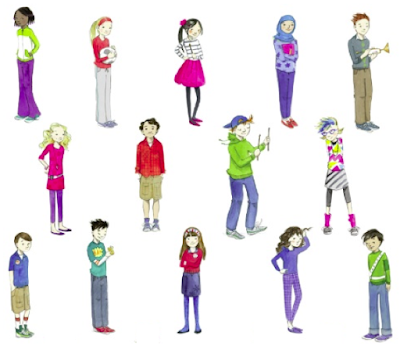
Students from The Last Fifth Grade of Emerson Elementary
Jacket art © 2016 by Abigail Halpin


Hooray!!!
              Laura Shovan is back, as promised.

In last week's spotlight interview, Laura revealed the DMC challenge for May is to write a persona poem. While she gave some hints about how to write such a poem, we thought it might be helpful to examine the process in more detail. So today Laura wears not only her verse novelist hat, but also her TLD contributor hat, to share her insights and experience as a poet in the schools.

Laura Shovan's previous posts on Today's Little Ditty include:


Today we'll discover how Laura shares the process of writing persona poems with elementary students and whether she applied the same process in writing her novel-in-verse:


Thank you for inviting me back to Today’s Little Ditty, Michelle. Our DMC Challenge combines elements of ekphrastic poetry—we’re using a visual image of a person as a writing prompt—and one of my favorite forms, the persona poem. You can find a definition of the form HERE. While a portrait poem describes a person, a persona poem is spoken in the voice of that person.

My love of persona poems began in college, when I studied Dramatic Writing. Instead of writing plays, I found myself focusing on monologues. Monologues combine voice (diction, word choice), point of view (the thread of the speaker’s thought process through the piece), and a moment of change or realization. After college, I continued to write these monologues in the form of persona poems.

I enjoy working with students on persona poems for several reasons. The form is great for teaching first person point of view. For some children and teens, it's a stretch to imagine what another person might be thinking about or feeling. Writing a poem is a safe way to wonder about someone else's personality and experiences, and therefore build compassion.

Writing a persona poem does require a lot of imagination, so I like to give students structure as they draft.

Mummy Case of Lady Teshat

Click HERE for more info
and to zoom in on the image.
1. Someone to look at.

The backbone of this writing prompt is simple. I pass around postcards or photographs clipped from newspapers and magazines. Sometimes we have fine art portraits provided by the school's art teacher. Students choose one portrait or card to focus on. Having a concrete visual in front of them provides tangible details to record in the poem.

2. Start with what's real.

I put one image on the screen or board for the group to discuss. The sarcophagus called Mummy Case of Lady Teshat is a favorite.

In looking at the image, I split our discussion into two parts. First, we list the facts – the things we can actually see. There is no guessing allowed. We might point out that the sarcophagus is highly decorated, that there is jewelry on her hair, that the coffin is made of wood. Do we know what's inside? No – we put that kind of imagining aside until we have all our facts written down.

3. Imagine what's not seen.

Once we've exhausted the details of the image, we explore what we think. Now we let our imaginations run wild. Who is the person in the painting or photograph? Where is he going and why? How is he feeling? What might happen next?

When it's time to write, the students who need organization make a t-chart. On one side, they'll write "I see" and list all of the things they observe in the image they chose. The other side of the chart is space for "I imagine."


And that brings me to another type of learning that happens with persona poems. Because we are talking about what we see (the facts) and then imagining what is unseen (what happens next, or the person's feelings), this exercise models the process of writing poetry. Poets take concrete observations and present them in a way that creates emotional impact or some kind of revelation. That's exactly what we do in a persona poem.
  
Malaika N. was a fifth grader at Swansfield Elementary who used Lady Teshat as her inspiration. Take a look at Malaika’s response to the sarcophagus.

Mummy of Lady Teshat
     by Malaika N.

Mummified lady.
The casket resembles her.
Triangles and designs are all over.
She has dark hair and big eyes.
Inside, she screams to come out.
The gathering anger of 10,000 years
with a powerful kick will set her free.
Now she roams free.
She also roams unseen.
Now she is as weak as a baby bird.
She crumples to the ground.
Her dust finds it way back.
She is forever trapped in what she calls
the box of the afterlife.

The early lines of the poem reflect the “facts” of the image. When the poet allows her imagination to roam, the result is powerful.


Michelle asked me how I used this process to develop the characters in THE LAST FIFTH GRADE OF EMERSON ELEMENTARY. While I didn’t write in response to an image, I did rely on the “Facts” versus “I imagine” structure.

Brianna Holmes
When I came up with the character of Brianna Holmes, I only knew one thing about her: Her family was homeless. A neighbor of mine works with our local school system, providing support to homeless families. [Stay tuned for a forthcoming interview with her neighbor at Laura's blog.]  Because Emerson Elementary is modeled on schools in my area, it was important to include a homeless character.

The “fact” I knew was that motels are a form of temporary housing for homeless families. What I imagined was that a homeless fifth grade girl would want to visit at each of her classmates’ houses, because doing so would help her plan what her own home might be like. With this combination of fact and imagination, I wrote the list poem, “Where They Live.”


       Copyright 2016 Laura Shovan, used by permission of the author.


From there, I continued to imagine how being homeless might affect Brianna’s point of view. I took the stanza in “Where They Live” where Brianna observes her classmates’ closet full of clothes, and imagined that Brianna had a passion for fashion. But because I knew (Fact) her family was struggling, I imagined that Brianna would have to get creative. That is how this character became adept at sewing, embellishing, and making over her clothes. The quality of resourcefulness came to define Brianna’s personality, more so than her homelessness. In fact, the first time we meet Brianna in the book, we learn about her creativity with clothes, not that she is homeless.

 
    Copyright 2016 Laura Shovan, used by permission of the author.


I’m looking forward to reading everyone’s DMC persona poems. I hope you have fun inhabiting someone else’s voice while you’re writing.


Thank you, Laura, for challenging us to stretch ourselves!


Laura Shovan is former editor for Little Patuxent Review and editor of two poetry anthologies. Her chapbook, Mountain, Log, Salt and Stone, won the inaugural Harriss Poetry Prize. Laura works with children as a poet-in-the-schools. The Last Fifth Grade of Emerson Elementary, her debut novel-in-verse for children, was released last month by Wendy Lamb Books/Random House.

Visit her at Laura Shovan.com.


This week we featured poems by
Diane Mayr and Angelique Pacheco.
If you'd like to try your hand at writing a persona poem...

Send it to TodaysLittleDitty (at) gmail (dot) com or use the contact form in the sidebar to the right. Some poems may be published on the blog as daily ditties, but all of them will appear in a wrap-up celebration on Friday, May 27, 2016.

You're welcome to send me the photograph, painting, or other image that inspired your poem as long as I can properly attribute the artist/photographer. Feel free to use your own photographs, works of art in the public domain, or works that fall under a "creative commons" license, but make sure to send me the link for proper copyright attribution.

One lucky participant will win a personalized copy of Laura Shovan's fantastic new verse novel for middle grade readers, THE LAST FIFTH GRADE OF EMERSON ELEMENTARY.


Thank you to Violet Nesdoly for hosting this week's Poetry Friday roundup.


DMC: "The Mermaid" by Angelique Pacheco


THE MERMAID

My tail glistens in the sun
I long to be free to run
My transformation has begun
And my parents begin to shun
They don’t accept the human son
My Love and I long to have fun
The life I knew becomes undone


© 2016 Angelique Pacheco. All rights reserved.


Laura Shovan has challenged us to write persona poems this month. Click HERE for more details. You don't need to include the artwork that inspired your poem, but you are welcome to as long as I can properly attribute the artist/photographer.

Send your poem to TodaysLittleDitty (at) gmail (dot) com, or use the contact form in the sidebar to the right. All contributions will be included in a wrap-up celebration on Friday, May 27th, and one lucky participant will win a personalized copy of her fantastic new verse novel for middle grade readers:


Tuesday, May 10, 2016

DMC: "Farm Stand" by Diane Mayr


"Farm Stand" © 2016 Diane Mayr. All rights reserved.  Painting by Hokusai (1760-1849).


Laura Shovan has challenged us to write persona poems this month. Click HERE for more details. You don't need to include the artwork that inspired your poem, but you are welcome to as long as I can properly attribute the artist/photographer.

Send your poem to TodaysLittleDitty (at) gmail (dot) com, or use the contact form in the sidebar to the right. All contributions will be included in a wrap-up celebration on Friday, May 27th, and one lucky participant will win a personalized copy of her fantastic new verse novel for middle grade readers:


Thursday, May 5, 2016

Spotlight on Laura Shovan + DMC Challenge


LAURA SHOVAN
                                       Photo: Karen Leigh Studios


Am I ever chuffed to be featuring Laura Shovan
as TLD's spotlight author for May!  

As many of you know, Laura has been a Today's Little Ditty contributor for the last two years, so to be able to showcase my knit-happy, Dr. Who-lovin', show tune-singin', uber-talented and ever-so-knowledgeable friend and her debut novel gives me the greatest pleasure.

Part poet, part editor, part educator, part educational consultant for teens with learning differences, and author of a brand spankin' new novel-in-verse, keeping up with Laura Shovan is not easy. Yet somehow she always manages to find time to write an engaging blog post, organize a slam-dunk poetry project, or offer a personal poetry recommendation to a friend. She's a wonder when it comes to making poetry connections, and with fifteen years experience as a poet-in-the-schools for the Maryland State Arts Council, you can be sure Laura knows her audience and always brings out the best in the children she works with. They don't call her Mrs. Poems for nothing!

Laura is former editor for the literary journal Little Patuxent Review and editor of two poetry anthologies. Her chapbook, Mountain, Log, Salt and Stone, won the inaugural Harriss Poetry Prize. Impressive, right? You can find out more about Laura, her books and achievements, and also her school visit availability at her website, LauraShovan.com.

Today we'll be focusing on her latest accomplishment which is making quite a splash in the kidlit publishing world: THE LAST FIFTH GRADE OF EMERSON ELEMENTARY (Wendy Lamb Books/Random House, April 2016).

THE LAST FIFTH GRADE OF
EMERSON ELEMENTARY
Wendy Lamb Books, April 12, 2016
ISBN: 978-0553521375
Find at Amazon.com, Barnes & Noble
or via Indiebound.org.

Request a signed copy from Laura’s
local bookstore, The Ivy Bookshop.
Just leave a note in the comments
when placing an order.
As described by Laura in an excellent interview about making poetry fun and relevant for every child,

THE LAST FIFTH GRADE is about a group of students who decide to save their school from demolition. Through a class poetry project, they describe their excitement about being the oldest kids at Emerson ES, their concerns about moving on to middle school, the changes they are coping with at home, and what makes their school special enough to fight for.

There's much to love about this book—the history, the familiarity, the poignancy, the community-building, the humor—but for me, two aspects are most noteworthy.

First, the believability.  There are eighteen students in Ms. Hill's fifth grade class, each with a unique voice and all of them credible.

Take Katie McCain, for example, from "Writing Time":

Some mornings
my words are clumsy.
They bump into each other.
Smoosh
       boosh
             BAM!
They've got as much rhythm
as an octopus
doing the chicken dance.

Or Norah Hassan, excerpted from "Hijab":

When I put the hijab on
I float inside my scarf's blue cloth,
the golden threads shimmer
like sunshine on water.

                                             Or Rennie Rawlins, from "Hungry Yellow Bulldozers":

                                             I can picture them
                                             sitting at the edge
                                             of our kickball field.
                                             Two yellow bulldozers
                                             crouched outside,
                                             ready to eat our school
                                             in one greedy gulp.


The other thing I find particularly noteworthy is that this book never shies away from sensitive or controversial subject matter—homelessness, intolerance, divorce, death, identity. It's all fair game because it's all real world. No holds barred.


Take a look at this senryu titled "Shoshanna Says" by Rachel Chieko Stein:

"You can't be Jewish."
But I've never even
been to Japan. 
You can read more from Rachel at Jama's Alphabet Soup.

Or this, from Edgar Lee Jones, excerpted from "The Funeral":

The church smells too clean.
I feel like I can't breathe.
I escape to the back room,
where they've got donuts and coffee.
My brother finds me, fills a cup
halfway with milk, pours in some coffee.
I take small sips. Bitter and sweet.
The flavor makes me think of Grandpa,
his coffee breath in the morning.

With so many diverse and true-to-life personalities united in a common goal, teachers can't go wrong by incorporating this fun book into their curriculum. Laura has made it easy by including a glossary of poetry forms and suggested prompts at the back of the book. What's more, Sylvia Vardell has gone and made it even easier by creating a educator's guide for THE LAST FIFTH GRADE OF EMERSON ELEMENTARY, which you can preview HERE or download HERE.

Short of two bulldozers on a voracious rampage, I can't imagine what might prevent anyone from embracing this novel-in-verse!

...except, perhaps, me blabbing on endlessly.

Don't worry, I'm done now.

I hope you enjoy this month's spotlight interview, beginning with five of Laura Shovan's favorite things:

       Favorite sound:   
Spring peepers.

       Favorite music:
I’m an 80s girl. This summer, I’m going to see Duran Duran for the first time.
 You are not! Click HERE for one of Laura's (and my) Duran Duran favorites.

       Favorite childhood memory:
Visiting my grandparents. They lived in a big, old house called The Old Rectory in a rural part of Nottingham, England. It was as magical as it sounds.

"The Old Rectory" ...now converted into flats, but still magical.

       Favorite teacher in school:
My third grade teacher Mrs. Khoury was my favorite. I felt that she saw who I was as a person. Also, she thought I was a good writer. I cried when she moved away.

       Favorite children’s poet:
Robert Louis Stevenson when I was a child. Marilyn Singer and Calef Brown now.


Congratulations on your debut novel, Laura!  How has the experience of writing a novel-in-verse changed or challenged you?

Thank you, Michelle! I started the book as a collection of 30 poems, each poem in the voice of one student in a fifth grade class. The biggest challenge was growing the book into a novel. The first storyline I came up with didn’t work, so I threw it out and started over. That experience reminds me of a favorite poem, Kay Ryan’s “We’re Building the Ship as We Sail It.”

Persona poems are a form I love, so I’m comfortable creating characters. The biggest learning curve for me was piecing together a plot. The story had to move forward poem by poem and character by character. It felt like putting together a giant jigsaw puzzle.


Can you tell us a little about your writing routine—when, where, how you prefer to write?
Book launch at The Ivy Bookshop                  Photo: Jen Grow

Morning person here! If I can get a poem (or 1500 words if I’m working on a prose piece) written before 11 am, it’s a good day. When I was working on revisions with my editor, I created a shrine of encouraging things in my writing space: an owl card from my grad school mentor, a small vase of feathers, a Marceline the Vampire Queen figure, and other mementos.


One of your inspirations for writing THE LAST FIFTH GRADE OF EMERSON ELEMENTARY was Edgar Lee Masters’ SPOON RIVER ANTHOLOGY (1915), but I can’t help wonder how much of it was also inspired by your personal encounters with children as a poet in the schools?


My son had just finished fifth grade when I started working on the book, so many of the original characters were based on his friends and classmates. By then, I’d been working as poet in the schools for six years, so those stories were seeping into the book too, along with memories from my own childhood. The scene where Shoshanna’s mother makes her invite Mark to the movies and she’s worried other kids will think they’re going on a date – that happened when I was in fifth grade. I officially apologize to Doug Mancini!

Taken from THE LAST FIFTH GRADE OF EMERSON ELEMENTARY
© 2016 Laura Shovan, used by permission of the author.


As if writing a novel-in-verse wasn’t enough of a monumental undertaking, Ms. Hill’s fifth grade class encompasses 18 diverse characters with 18 unique voices— each with their own set of real-life obstacles and aspirations, many of which are sensitive in nature. I imagine you had to rein them in some to allow the novel to come together as a whole. This is probably a big ask, but can you summarize your process of managing it all?

Find out more about this shockingly huge binder
at Sharing Our Notebooks.
I spent a lot of time on the characters. More than once, I pulled the whole book apart, revised the poems of each individual character one by one, and then reconstructed the book. This was a way for me to create consistent voices. The binder is where I kept drafts of each poem, organized by character.

The earliest version of the book was 30 poems, 30 characters. Over time, I cut some of the voices and combined pairs. My editor wanted to get the voices down to 18, but she also felt that the class queen bee didn’t have enough depth. We put that character together with one whose mother was in the military, and the result is Hannah. She’s a much more layered voice as a result.


Please share a favorite selection from THE LAST FIFTH GRADE OF EMERSON ELEMENTARY and tell us why it’s a favorite.

That’s really hard, Michelle! I’m partial to the series of poems that are dated around Valentine’s Day. Jason’s “Self Portrait” – the concrete poem with the little secret tucked into it – was the first poem I wrote for the book.

Taken from THE LAST FIFTH GRADE OF EMERSON ELEMENTARY
© 2016 Laura Shovan, used by permission of the author.


For Ms. Hill’s class, fighting to save their school becomes a life-changing event. What is something you’ve had to fight for in your own life?

On a school visit with students from Northfield Elementary
I am vocal about poetry advocacy. Giving young people space to find their voices is especially important in today’s classroom.  In school, we are doing more than creating future college students and workers. We are spending hours a day with developing human beings. Sharing poetry encourages children and teens think and talk about their lives, makes them feel valued beyond their role as students, and helps them connect with teachers and peers. I may not look like I’m fighting when I visit a school, but I hope I’m showing educators, administrators, and parents this: Poetry is a powerful tool for supporting students’ growth as readers, writers, and people.
Laura Shovan, future author
(with fabulous hair)


What’s coming up next for you?

I am working on another middle grade novel for Wendy Lamb Books.


If you had all the world’s children in one room, what would you tell them?

If I had all the children of the world in one room, I wouldn’t tell them anything. I’d get them working on something together: a poem, a song, painting a mural. The things they can learn from one another are more valuable than anything I might say.


Finally, what you have chosen as this month’s ditty challenge?

Let’s go with one of my favorites, persona poems. These can be in third person, or written like a little monologue. I like using post-cards or fine art portraits. It helps to have a face or figure to look out.

When I work with young writers on this prompt, first we list the facts of the image. These are the things we can see and know are true (no guessing). Next, we imagine what the person is thinking and doing. If we could press “play” and make the image move, what would happen next?

Wonderful— persona poems, it is! 

I know I tend to say this a lot, but I'm really excited about this month's challenge. No doubt the variety of poems will be incredible.

You've been such fun to have here today, Laura. Thank you for the interview and also for generously providing a personalized copy of THE LAST FIFTH GRADE OF EMERSON ELEMENTARY to one lucky DMC participant chosen randomly at the end of the month.

For those still a bit uncertain as to what a persona poem is, Laura will be back here at Today's Little Ditty next Friday to explore persona poems further.  But for those of you good to go, by all means have at it!


HOW TO PARTICIPATE:

Throughout the month send your persona poems to TodaysLittleDitty (at) gmail (dot) com or use the contact form in the sidebar to the right. You're also welcome to send me the photograph, painting, or other image that inspired your poem as long as I can properly attribute the artist/photographer. Feel free to use your own photographs, works of art in the public domain, or works that fall under a "creative commons" license, but make sure to send me the link for proper copyright attribution.

For children under 13 who would like to participate, please read my COPPA compliance statement located below the contact form.

Some poems may be published on the blog as daily ditties, but all of them will appear in a wrap-up celebration on Friday, May 27, 2016.


BLOGGER FRIENDS:
Thank you for publishing your poems on your own blogs– I love that!  Please also remember to send me a copy of your poem or a direct link to your post. That way I know I have your permission to post your poem on Today's Little Ditty.


* * * * * * * * * * * * * * * * * * * * *

Thanks again to everyone who participated in Marilyn Singer's challenge last month to write a poem inspired by the word "echo." I'm still feeling the reverberations of such an amazing collection of poems!

Random.org has determined that the winner of a copy of ECHO ECHO: Reverso Poems about Greek Myths by Marilyn Singer and illustrated by Josée Masse is . . .

CATHERINE FLYNNCongratulations, Catherine!


Sylvia Vardell (yes, the same Sylvia who creates such marvelous educator guides) is hosting this week's Poetry Friday roundup at Poetry for Children. In honor of Mother's Day, you'll find a wonderful list of diverse poetry books about mothers, as well as  links all of this week's other poetry offerings.


Tuesday, May 3, 2016

Poetry Postcard: "Sadness is black & blue"


From the Silver Star Elementary Poetry Postcard Project, Vancouver, WA, April 2016


Ciara has done a phenomenal job of capturing sadness with all her senses,
don't you think?  Such a talented 5th grader!


Thanks to Jone Rush MacCulloch for celebrating National Poetry Month with this wonderful postcard project, and to the students at Silver Star Elementary in Vancouver, WA for sharing their hearts.

The postcard I received last year, about a preposterous panda, can be found HERE
The one I received in 2014, about a fantastic frog, can be found HERE.


Monday, May 2, 2016

Dylan T. for Dylan B.


G.Hüdepohl (atacamaphoto.com)/ESO


Sharing this video and excerpt from Dylan Thomas' essay "Notes on the Art of Poetry" in honor of my Dylan, who casts his own "delight and glory and oddity and light." 

Happy 16th birthday, Sweetheart!


Notes on the Art of Poetry
     ~ Dylan Thomas, 1951

I could never have dreamt that there were such goings-on
in the world between the covers of books,
such sandstorms and ice-blasts of words...
such staggering peace, such enormous laughter,
such and so many blinding bright lights...
splashing all over the pages
in a million bits and pieces
all of which were words, words, words,
and each of which were alive forever
in its own delight and glory and oddity and light.