Showing posts with label poetry forms series. Show all posts

Thursday, May 16, 2019

B.J. Lee: The Poet and the Picture Book Writer


B.J. Lee's author signing at Barnes & Noble, Clearwater FL

Many of us poet-types also engage in other writing projects, like picture books, nonfiction, or novels. But are we always consciously aware of the changes we go through to make that happen? For me, the writer's transmutation—how we adapt one skill set to accommodate a different genre—is complex and mysterious.

How, for example, are the processes of writing poetry and rhyming picture books similar or different?
 
Purchase at Amazon.com, Barnes & Noble
or via Indiebound.org.

I posed this question to TLD contributor B. J. Lee, and she was kind enough to address the matter for me.

B.J. Lee is our resident expert on poetry forms, but with her debut rhyming picture book released from Pelican Publishing earlier this year, I asked if she might talk about how a poet who excels in poetry forms transformed into a picture book author.


So here she is, hungry readers— 
Chomp down on this appetizing article by B.J. Lee!


The Poet and the Picture Book Writer

This poet and this picture book writer are different artists. As a poet, I struggle with story structure. It used to be far easier for me to write an entire poetry collection of 20 or so poems than it was for me to write one picture book. Fortunately, picture book writing is getting a smidgen easier for me and it’s a good thing because poetry is a very hard sell. I still write lots of poetry but picture books call out to me as well.

So what is the difference between writing a poem and writing a picture book? The first and probably most important difference is arc. A poem needs no arc. A picture book relies heavily on arc.

Because I struggled with picture book writing, for the Gator character I had in mind, I was drawn to a form with a built-in arc. So how did I turn the structure of There Was an Old Lady Who Swallowed a Fly into a picture book with my character, Gator?

I followed the built-in arc of There Was an Old Lady...which gave me rising action.


As Gator unwisely swallows a succession of hapless animals, he becomes increasingly uncomfortable. Something has to happen – a climax of some sort.

Text © 2019 by B.J. Lee. Illustrations © 2019 by David Opie.
From THERE WAS AN OLD GATOR WHO SWALLOWED A MOTH (Pelican Publishing)


I chose to change up the climax and not have Gator die. There is a trend in modern There Was an Old Lady... parodies, including those by Lucille Colandro, Jennifer Ward and Penny Parker Klostermann, to not have the main character die. I didn’t want Gator to die either. How did I set it up so Gator didn’t die? With my first stanza, and the moth/cough slant rhyme. Without including spoilers, perhaps you can guess how I used this rhyme pair to produce a better fate for Gator.

The other difference between poetry and picture books is that a poem it is about capturing one thing, with the exception of narrative poetry, but more on that later. A poem is about one moment, one feeling, one image. This begs the question: can you turn a poem into a picture book? While one moment, one feeling, one image, can be the start of a picture book, and perhaps a very good start, it will somehow need to be expanded into a story with an arc.

Here is an example of a poem about one thing.

Recently published in the Savannah Morning News.                                    


I don’t believe this story is expandable into a picture book. It captures one moment in nature. It doesn’t go anywhere story-wise. Got story? No.

The following poem, on the other hand, might be able to be expanded into a picture book because it has a narrative. I have no plans currently to turn this poem into a picture book but, now that I think about it… hmmmm. I guess time will tell! Got story? Maybe.

Highlights, June 2018


So if you have a narrative poem, which includes the ballad, as I previously discussed in a TLD post, you can explore it to see if you can make it into a picture book. I have several narrative poems I did this with, including one ballad. Of course, it usually has to be expanded greatly. There are other considerations when writing picture books such as pacing. How do you spread a story over 32 (or more) pages. It’s also important to think about page turns.

Very rarely we do find existing poems that have been made into picture books, but there are a few. One that comes to mind is A Fairy Went a-Marketing. This is an older poem by Rose Fyleman, originally published in her collection, Fairies and Chimneys (a wonderful collection, by the way, if you are partial to fairies...and who isn’t?).

Some songs have been made into picture books, and I consider songs to be poems set to music, such as Octopus’s Garden by Ringo Starr. Incidentally, There Was an Old Lady Who Swallowed a Fly was originally a song and it has been published as a picture book by writers such as Simms Taback and Pam Adams.

In conclusion, you might check to see if you have any poems that spark picture book ideas, particularly narrative poems. While Gator didn’t start with a poem, I was inspired to use a poetic cumulative rhyme structure to capture this larger-than-life character.

I feel very lucky to have had THERE WAS AN OLD GATOR WHO SWALLOWED A MOTH accepted by Pelican Publishing. When using cumulative rhyme as a picture book story structure, one really has to do something unique with it, because so many adaptations have been written. I had success with my version because it was regional and thus appealed to Pelican Publishing.

On my journey to picture book publication, the classic cumulative rhyme, There Was an Old Lady Who Swallowed a Fly inspired me to understand arc. I hope something in this post inspires you on your picture book journey.

Picture book publication has been such a blessing and I love how people are falling in love with my unfortunate character, whose appetite gets the best of him. My community is rallying around me and Gator in the form of a fabulous book launch.

"Gator Day" at Boyd Hill Nature Preserve, March 10, 2019.


Thank you, B.J., for another fabulous visit to Today's Little Ditty!
Read B.J.'s other TLD contributor posts: The Roundel and The Ballad.

AND thank you to Pelican Publishing for sending me a copy of There Was an Old Gator who Swallowed a Moth for one lucky TLD reader.

To enter, leave a comment below or send an email with the subject "Gator Giveaway" to TodaysLittleDitty (at) gmail (dot) com by Tuesday, May 21, 2019. The winner will be randomly selected and announced next Friday.


B.J. Lee is a former college music librarian turned full-time writer and poet. Her debut picture book, There Was an Old Gator Who Swallowed a Moth, released January 28, 2019 from Pelican Publishing. She is an award-winning children’s poet with over 100 poems and stories published/forthcoming. She has written poems for children’s anthologists Lee Bennett Hopkins, J. Patrick Lewis, Kenn Nesbitt and others, and appears in anthologies by such publishers as Bloomsbury, National Geographic, Little, Brown, Otter-Barry and Wordsong. Magazine credits include Spider, Highlights, and The School Magazine.


* * * * * * * * * * * * * * * * * * * * * * * * * * * * * *
Elizabeth Steinglass has challenged us to "write a poem giving instructions to an inanimate object about how to do its job."  This week's daily ditties included poems by Tabatha Yeatts, Diane Mayr, students Chloe and Madison, and Cindy Breedlove. Also don't miss the original instruction poems shared today by Molly Hogan, Mary Lee Hahn, and Christie Wyman. Add yours to the May 2019 padlet by the end of this month!
At Reflections on the Teche, Margaret Simon and her students are celebrating nature with "pi-ku" poetry. Never heard of it? Discover pi-ku and many other poetry wonders at this week's Poetry Friday roundup!


Thursday, October 18, 2018

B.J. Lee: The Ballad


Tim


Grab a pint and lend an ear . . . 

I'm delighted to welcome TLD contributor B.J. Lee back to the poetry tent. (As you can see, the party's already begun!) 

I'm especially excited because the poetry form B.J. will be talking about today is the ballad. The ballad is an ideal storytelling form, and since Calef Brown's challenge this month is to write a poem that tells the story of two anthropomorphic objects, the timing is perfect to give this form a try!

The content of today's post was first published on B.J.'s blog Blue Window, which hasn't been very active as of late, but is still a wonderful resource.

I also recommend clicking HERE to read B.J.'s first TLD contributor post about the roundel (which, incidentally, might also be an interesting choice for this month's challenge).

Take it away, B.J.!


*  *  *  *  *  *  *  *  *  *  *  *  *  *  *  *  *  *  *  *  *  *  *  *


I enjoy writing in forms and learning about forms and have written several ballads. The ballad is defined as:
"a form that comes in four-line verses, usually alternating between four and three beats to [the] line. The word comes from ballare, the Italian for “to dance’ (same root as ballet, ballerina and ball)." 
                     ~ Stephen Fry, "The Ode Less Travelled"

Another important aspect of the ballad is that it tells a story.

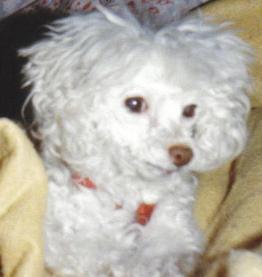
This one is about my naughty toy poodle, Lulu, may she rest in peace.
Here's a photo of the little stinker:

http://bluewindow.weebly.com/uploads/2/2/4/8/22482026/3930681.jpg?262

She looks all innocent, but she is definitely thinking
her Machiavellian thoughts and plotting her next dastardly scheme!


The Ballad of the Naughty Poodle

I’ll tell you a story of a dog in her glory—
the naughty toy poodle named Lulu.
But first let me say, do not get in her way
or she may put one over on you too.

Although she’s petite and may strike you as sweet,
believe me, her mind’s always cooking
up schemes to sneak by and eat my potpie
the minute she sees I’m not looking.

I tell her to stay but she does not obey
and makes her way down floor by floor.
She shreds paper towels with claws like an owl’s.
When spotted, she speeds out the door.

She’ll stretch and she’ll yawn but then once I am gone,
Lulu tips over the trash.
On the floor I find mustard mixed in with the custard.
It’s clear she’s been having a bash!

She lands with a leap in the composting heap
no matter how loudly I yell.
I shout, “You're in trouble, come here on the double.”
I hold my nose—wow—does she smell!

I give her a scrub in the claw-footed tub.
She splashes the suds in my face.
When I grab for a towel, she lets out a howl
and runs away like it’s a race.

Yes, this small, dirty dog redefines the word ‘hog.’
She’s always escaping my clutches.
And as hard as I try, the house is a sty—
just some of the little swine’s touches.

© 2010 B.J. Lee. All Rights Reserved.
First published in “Umbrella Journal’s Bumbershoot Annual” August, 2010


The ballad comes to us from song and folk traditions and many, many popular songs are ballads. Here is the first stanza from “The Wreck of the Edmund Fitzgerald” by Gordon Lightfoot, ©1976:

Image by R. LeLievre (S. S. Edmund Fitzgerald Online)

The legend lives on from the Chippewa on down
Of the big lake they called “Gitche Gumme.”
The lake, it is said, never gives up her dead
When the skies of November turn gloomy.


Read the rest of the poem HERE or listen to the musical version HERE.

Typically a ballad will rhyme either abab or abcb if it is in quatrains.  Gordon has chosen the latter and so have I.

Some books and websites define ballads as being typically written in iambic meter

daDUMdaDUMdaDUMdaDUM
daDUMdaDUMdaDUM


but Gordon broke that rule, giving us anapestic meter:

dadaDUMdadaDUMdadaDUMdaDUMda  (with an extra syllable at the end—a feminine ending).

My poem, above, is also written in anapestic meter (with some feminine endings as well as internal rhyme).
From Through the Looking Glass (1902)


I have also seen ballads arranged in sestets (6 lines to a stanza). A good example is "The Walrus and the Carpenter" by Lewis Carroll (this one is iambic).

The Walrus and the Carpenter
were walking close at hand.
They wept like anything to see
such quantities of sand:
“If this were only cleared away,”
they said, “it would be grand.”

Read the rest of the poem HERE.


And, I have seen ballads written with seven beats to the line, although arguably, each line could be broken down into two lines of four and then three beats.  Here is a stanza from Robert Service’s “The Shooting of Dan McGrew” (anapestic):

A bunch of the boys were whooping it up in the Malamute saloon;
The kid that handles the music-box was hitting a jag-time tune;
Back of the bar, in a solo game, sat Dangerous Dan McGrew,
And watching his luck was his light-o'-love, the lady that's known as Lou.

Read the rest of the poem HERE or listen to the poem being read by Ed Begley below.


No matter what decision you make regarding format and meter, ballads are a fun choice if you wish to tell a story in your poem.

Thanks so much, B.J.! 

I hope we'll see at least a couple of ballads for this month's challenge, but feel free to share your non-DMC ballads in the comments if you'd like.

(B.J. also asked me to let you know that she'll be away at a conference this weekend but looks forward to reading and responding to your comments on Monday.)


B.J. Lee’s debut picture book, There Was an Old Gator Who Swallowed a Moth, is forthcoming from Pelican Publishing (Spring, 2019). She has written poems for many anthologies, including Construction People (ed. Lee Bennett Hopkins), The National Geographic Book of Nature Poetry, National Geographic’s Poetry of US (ed. J. Patrick Lewis), One Minute Till Bedtime (ed. Kenn Nesbitt), as well as popular children’s magazines. Visit B.J. at her website.


Calef Brown's DMC challenge is to write a poem that tells the story of two anthropomorphized objects. Despite a late start, the October 2018 padlet is already quite active! Make sure to add your poem by October 31st. Our featured daily ditties this week were by Tabatha Yeatts, Dianne Moritz, Angelique Pacheco, and David McMullin. The wrap-up celebration will be on Friday, November 2nd, so that I can accommodate as many daily ditties this month as possible.
Brenda Davis Harsham is hosting this week's Poetry Friday roundup at Friendly Fairy Tales. It's the bee's knees—you won't want to miss it!


Thursday, April 19, 2018

B.J. Lee: The Roundel


Leonie

Welcome to the Poetry Tent!

Inside, our newest TLD Contributor is patiently awaiting her introduction—

B. J. LEE

B.J. is one of the more prolific "freelance" poets I know, with nearly 100 poems published in magazines and anthologies. What's more impressive is how wide-ranging her work is, and the fact that she chooses to write much of it using traditional poetry forms. If you haven't yet puzzled your way through poetry forms with strict rules about syllable counts, rhyme, meter, and repetition, let me tell you, it's no easy undertaking! B.J.'s craftsmanship is meticulous and exquisite. At one point we shared a poetry critique group (Poets' Garage) and I learned so much from watching her work through revisions. From the outside, it's a bit like magic.

Here at Today's Little Ditty, she's been featured in Limerick Alley and has contributed wonderful poems to Ditty of the Month Club challenges, including a roundel, poems in the style of Marlowe's "The Passionate Shepherd to His Love" and Yeats's "The Lake Isle of Innisfree," and many others. (Read all of her featured poems on Today's Little Ditty HERE.) She also has poems in both editions of The Best of Today's Little Ditty, and her debut picture book, There Was an Old Gator Who Swallowed a Moth, arrives from Pelican Publishing next spring.

Frankly, I don't know of anyone more qualified to talk about different poetry forms than B.J., so fortunately for us, that's what her TLD contributor posts will be about.

She begins today with a look at one of her favorite forms—the roundel.


*  *  *  *  *  *  *  *  *  *  *  *  *  *  *  *  *  *  *  *  *  *  *  *


When I first started writing children’s poetry, I used simple rhyming patterns such as ABAB and either ballad meter or a more rollicking anapestic meter. But as time went on, and I encountered poems written in different forms, I was intrigued and wanted to explore them. One of the earlier forms I fell in love with was the roundel.

The roundel consists of nine lines, each having the same number of syllables, plus a repetend (refrain) after the third line and after the last line. The repetend must be identical with the beginning of the first line: it may be a half line, and should rhyme with the second line. The roundel has three stanzas and its rhyme scheme is as follows: ABAR; BAB; ABAR, where R is the repetend. It sounds more complicated than it is!

Algernon Swinburne invented the form in the Victorian era (take a look at his poem "The Roundel" at Poetry Foundation), and Christina Rossetti and others quickly adopted it.

Here is an early roundel by Amy Levy, from A London Plane-Tree and Other Verse (1989). I’ve notated the rhyme scheme. Notice the *specialness* of the repetend!


A lovely roundel with a sparkly repetend! How did Amy do it? I was determined to find out.

I began exploring roundels, reading and writing. One of the first roundels that I ever wrote was a speculative roundel which was published in the dark children’s magazine, edited by agent Bree Ogden, called Underneath the Juniper Tree.


© 2011 B. J. Lee. All rights reserved. As published in Underneath the Juniper Tree.


The things I saw when I was lost
and followed signs for "Devil's Claw."
I took that road at such a cost—
the things I saw!

Through forest trees I peered in awe
at witches standing in the frost,
who handled things—an ear, a paw,

then quickly, in their cauldron tossed
these objects with a birdie's craw.
I turned and fled. My eyes had crossed—
the things I saw!

          – B. J. Lee

With this roundel, I was lucky to hit upon the “aw” rhymes coupled with the “ost” rhymes, which are actually very similar in sound. Notice that the repetend is “catchy,” something I think is critical to the success of a roundel, second only in importance to the theme of your poem. The repetend must be effective. The repetend must also be a phrase that bears repeating. And, it has to end on a good rhyming word, since it is part of the B rhymes.

That brings us to the rhymes! You need five A rhymes and five B rhymes (the repetend’s last word + 4 others) for a roundel. My process is to first see if the repetend I have in mind works rhyme-wise, and if not, find an alternate repetend. Your five A rhymes and B rhymes will have to work well together. I look at rhymezone online, and try to loosely see if I can get five A rhymes and five B rhymes that might work, without any forced rhymes, for my particular theme. Once I have five A rhymes and five B rhymes that I think could work, I proceed. It may take several tries with different sets of A and B rhymes.

Sometimes a roundel does not work out at all, but usually in the process, I can salvage some kind of poem out of it so the effort is not a complete loss. And if it works out, you have a poem in a cool form—a roundel to be proud of!

I personally find the roundel to be one of the easiest of the repeating forms, which include the pantoum, villanelle, triolet, rondeau, rondel, sestina and ghazal.

Remember, a good repetend is critical to the success of your roundel. It must be:
  1. Catchy
  2. Effective 
  3. Something that bears repeating.
  4. Have four solid rhymes, with no forced rhymes.

Do you want to try it?  Ready? Set! Write a roundel!


*  *  *  *  *  *  *  *  *  *  *  *  *  *  *  *  *  *  *  *  *  *  *  *

If you'd like to share a roundel that you've written, please feel free leave it in the comments.

Read the roundel B.J. wrote for Rebecca Davis's Kindness Poem challenge HERE.


Thank you for this "sparkly" post, B.J., and for taking on this new role at Today's Little Ditty.  You make writing roundels look easy! I'm sure I'm not the only one looking forward to learning about other poetry forms in future.


B.J. Lee’s debut picture book, There Was an Old Gator Who Swallowed a Moth, is forthcoming from Pelican Publishing (Spring, 2019). She has written poems for many anthologies, including Construction People (ed. Lee Bennett Hopkins), The National Geographic Book of Nature Poetry, National Geographic’s Poetry of US (ed. J. Patrick Lewis), One Minute Till Bedtime (ed. Kenn Nesbitt), as well as popular children’s magazines. Visit B.J. at her website.


The fun is nonstop during National Poetry Month . . .
                 and so are the giveaways at Today's Little Ditty!


Random.org has determined that the winner of a copy of With My Hands: Poems About Making Things by Amy Ludwig VanDerwater, illustrated by Lou Fancher and Steve Johnson is . . .

DIANNE MORITZ

Congratulations, Dianne!


Featured on Today's Little Ditty earlier this week: H is for Haiku: A Treasury of Haiku from A to Z by Sydell Rosenberg, illustrated by Sawsan Chalabi (Penny Candy Books, 2018). Don't miss the special guest post by Amy Losak and giveaway HERE.


DMC dinosaur poems have been causing quite a ruckus! Featured this week were daily ditties by David McMullin, Jessica Bigi, and Kate O'Neil. Believe it or not, our wrap-up celebration is coming up next Friday, so go ahead and add your poem to the April 2018 padlet before it's too late. One lucky participant will win a copy of Don't Ask a Dinosaur (POW! Kids, April 2018) signed by Deborah Bruss and Matt Forrest Esenwine.


In celebration of TLD's fifth birthday, I'm giving away five sets of The Best of Today's Little Ditty (Vols 1 & 2) to educators—teachers, caregivers, volunteers... anyone who shares their love of poetry with students of any age. To enter, contact me via blog comment, email, Facebook, or Twitter. I'll be compiling a list and drawing names at the end of April.


Now head on over to The Opposite of Indifference where Tabatha Yeatts is also celebrating a birthday—it's a new anthology! I'm honored and excited to have three poems in Imperfect: poems about mistakes: an anthology for middle schoolers. And wouldn't you know, she's also hosting this week's Poetry Friday roundup. Score!