Showing posts sorted by relevance for query Duncan. Sort by date Show all posts

Wednesday, April 17, 2019

Classroom Connections with Alice Faye Duncan


TODAY'S READ

A Song for Gwendolyn Brooks

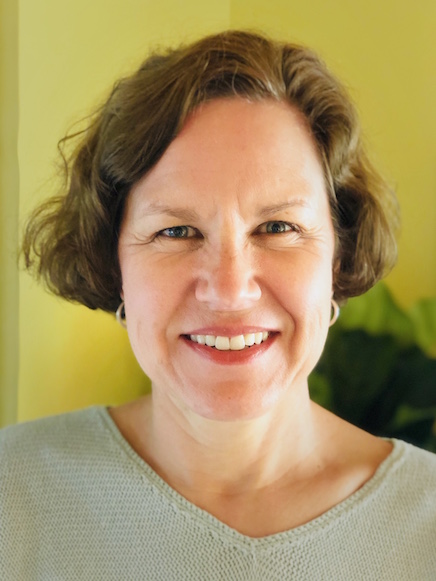
Alice Faye Duncan, Author
Xia Gordon, Illustrator

Sterling Children's Books (January 1, 2019)
ISBN: 978-1454930884

For ages 5 and up

Purchase at Amazon.com
Purchase at Barnes & Noble
Purchase via Indiebound.org


SYNOPSIS

With a voice that is wise and witty, Gwendolyn Brooks wrote poems that captured the urban Black experience and the role of women in society. She grew up on the South Side of Chicago, reading and writing constantly from a young age with her talent nurtured by adoring parents. Brooks ultimately published 20 books of poetry, two autobiographies, and one novel. In A Song for Gwendolyn Brooks, Alice Faye Duncan celebrates Gwendolyn’s life and work, illuminating the tireless struggle of revision and the sweet reward of success.


A PEEK INSIDE

Click on image to enlarge.

Text copyright © 2019 by Alice Faye Duncan. Illustrations copyright © 2019 by Xia Gordon.
From A SONG FOR GWENDOLYN BROOKS (Sterling Children’s Books).


IX 
SING a song for Gwendolyn Brooks.
She whittles her sonnets with perfect grace,
Like Edna St. Vincent Millay and Robert Frost.

With slinky, sly, and see-line spunk,
Gwen swings the blues with her black pen,
Like guitar players at Theresa's Lounge.

Gwen paints poems with paintbrush words,
And Gwen takes home a Pulitzer Prize.

A Pulitzer Prize?

A PULITZER PRIZE!


                © 2019 Alice Faye Duncan, all rights reserved.


ABOUT THE AUTHOR


Alice Faye Duncan discovered the snappy-snazzy poems of Gwendolyn Brooks, when she was a child scanning the crowded bookshelves in her parents’ home. After Alice earned an English degree in college, she went to library school, and used every free moment writing picture book manuscripts as she also pursued a writing career. She is the author of multiple children’s books including Memphis, Martin and the Mountaintop (a Coretta Scott King Honor Medal), Honey Baby Sugar Child, and Twelve Days of Christmas in Tennessee. When Alice is not writing or researching new books, she serves as a school librarian in Memphis, Tennessee.


CLASSROOM CONNECTIONS

Why is bringing poetry into the classroom important?

Poetry pricks the imagination and inspires young people to embrace their emotions. Poetry acknowledges that our human feelings are important and so often poetry inspires students to pick up their pens and write.

How might your book be incorporated into an educational curriculum?

A Song for Gwendolyn Brooks is an aural experience. It is sheer music. It is high emotion.  It is FUN to read aloud because of my incessant and effective use of alliteration, assonance, rhyme and repetition. The nine poems that make up the biography demand to be spoken. The book SWINGS. While it also demonstrates for the budding writer—examples of a sonnet, examples of free verse and the rigors of the editing process.

Can you suggest a specific classroom exercise related to your book?

Gwendolyn Brooks was famous for looking out her kitchenette window, watching her neighbors and writing about their lives. Alliteration is a repeated letter or sound. And frequently, Miss Brooks used alliteration to give her poems a musical quality. For this exercise, recall one of your memorable or inspiring neighbors. Write a seven line poem that celebrates or praises your neighbor's life.  Include alliterative language in the 1st, 5th and 7th line.

What is a simple, practical tip for teachers when it comes to incorporating poetry in the classroom?

Require students to memorize poems. Like a balm or healing salve, the power of these memorized words will comfort them in trying times.

Can you recount a specific instance of when poetry impacted a student or group of students in a positive way?

Early in this current school year, I introduced one of my high school students to Gwendolyn Brooks' Collected Works. After reading the collection, my student informed me that her favorite poem by Brooks is "The Mother." This encounter with Gwendolyn Brooks inspired my student to write her very first poem. She is now working toward self-publishing a book of poems to share with her high school peers.


CONNECT WITH ALICE FAYE DUNCAN

Website: www.alicefayeduncan.com
Facebook and Twitter: @alicefayeduncan
Instagram: @alicefayewrites

Look for her forthcoming picture book, Just like a Mama, illustrated by Charnelle Pinkney Barlow (Jerry Pinkney's granddaughter) on Mother's Day, 2020.


Many thanks to Alice Faye for participating in our Classroom Connections series for National Poetry Month, and for offering two copies of A Song for Gwendolyn Brooks (one hardback and one digital) for randomly selected TLD readers!

To enter, leave a comment below or send an email with the subject "Song for Gwendolyn Giveaway" to TodaysLittleDitty (at) gmail (dot) com by Tuesday, April 30, 2019. Winners will be announced on Thursday, May 2nd, so be sure to check back to see if you've won!


 * * * * * * * * * * * * * * * * * * * *

Check out the other Classroom Connections posts and giveaways on offer this month by clicking the names below!


Digital art © 2018 by Miranda Barnes,
based on a line from "Ghazal" by Tracy K. Smith.


TO FOLLOW:

The best way to keep up with the Classroom Connections series is by subscribing to Today's Little Ditty via email, which you can do in the sidebar. I will also be announcing the posts on social media. Like me on Facebook and/or follow me on Twitter (also in the sidebar) to stay informed that way. Catch up with Classroom Connections posts you may have missed by clicking on the "It's time to INSPIRE" icon in the sidebar, or by visiting my "Poetry in the Classroom" board on Pinterest.

Thursday, May 2, 2019

NPM Giveaway Winners!


What a fantabulous National Poetry Month celebration we had!

My heartfelt gratitude to the generous authors, editors, and publishers who put so much time and care into last month's Classroom Connections posts, and who donated copies of their collections, picture books, and verse novels for lucky TLD readers! Please show your support by buying these books and leaving reviews.

To browse all of the Classroom Connections posts, click on the "It's time to INSPIRE" image in the sidebar. Or, if you're looking for a specific post, click on "April" in the 2019 blog archive (also located in the sidebar), or visit my "Poetry in the Classroom" board on Pinterest.

And now, drumroll please...

Congratulations to the giveaway winners!

  • Otters, Snails and Tadpole Tails: Poems from the Wetlands, by Eric Ode, illustrated by Ruth Harper (Kane Miller, 2019)  goes to... LIZ STEINGLASS.
  • The Roots of Rap:16 Bars on the 4 Pillars of Hip-Hop, by Carole Boston Weatherford, illustrated by Frank Morrison (little bee books, 2019)  goes to... MATT FORREST ESENWINE.
  • Clackety Track: Poems About Trains, by Skila Brown, illustrated by Jamey Christoph (Candlewick, 2019)  goes to... ROSI.
  • A Suitcase of Seaweed & MORE, by Janet Wong (YUZU/Pomelo Books, 2019)  goes to... MOLLY HOGAN and DIANNE MORITZ.
  • This Promise of Change: One Girl's Story in the Fight for School Equality, by Jo Ann Allen Boyce and Debbie Levy (Bloomsbury Children's Books, 2019)  goes to... MEGAN K.
  • Predator and Prey: A Conversation in Verse, by Susannah Buhrman-Deever, illustrated by Bert Kitchen (Candlewick, 2019)  goes to... BUFFY SILVERMAN.
  • The Night the Forest Came to Town, by Charles Ghigna, illustrated by Annie Wilkinson (Orca Book Publishers, 2018)  goes to... SHERRY HOWARD.
  • Bayou Song: Creative Explorations of the South Louisiana Landscape, by Margaret Simon, with illustrations by Anna Cantrell and photographs by Henry Cancienne (Univ of Louisiana at Lafayette, 2018)  goes to... LEIGH ANNE ECK.
  • Superlative Birds, by Leslie Bulion, illustrated by Robert Meganck (Peachtree, 2019)  goes to... TABATHA.
  • Have You Heard About Lady Bird?: Poems About Our First Ladies, by Marilyn Singer, illustrated by Nancy Carpenter (Disney-Hyperion, 2018)  goes to... ANN MAGEE.
  • I'm the Big One Now!: Poems about Growing Up, by Marilyn Singer, illustrated by Jana Christy (Wordsong, 2019)  goes to... JESSE ANNA BORNEMANN.
  • A Song for Gwendolyn Brooks, by Alice Faye Duncan, illustrated by Xia Gordon (Sterling Children's Books, 2019)  goes to... RENEE LATULIPPE (hardcover) and KIMBERLY HUTMACHER (digital).
  • Climbing Shadows: Poems for Children, by Shannon Bramer, illustrated by Cindy Derby (Groundwood Books, 2019)  goes to... CHRISTIE WYMAN.
  • The Moon Within, by Aida Salazar (Arthur A. Levine Books, 2019)  goes to... LINDA MITCHELL.
  • Boom! Bellow! Bleat!: Animal Poems for Two or More Voices, by Georgia Heard, illustrated by Aaron DeWitt (Wordsong, 2019)  goes to... VICKI WILKE.
  • Home Is a Window, by Stephanie Parsley Ledyard, illustrated by Chris Sasaki (Neal Porter Books, 2019)  goes to... LINDA B.
  • They Call Me Güero: A Border Kid's Poems, by David Bowles (Cinco Puntos Press, 2018)  goes to... TARAFARAH7.
  • Voices: The Final Hours of Joan of Arc, by David Elliott (HMH Books for Young Readers, 2019)  goes to... JAMA.
  • The Day the Universe Exploded My Head: Poems to Take You into Space and Back Again, by Allan Wolf, illustrated by Anna Raff (Candlewick, 2019)  goes to JANET CLARE F.
  • Hello, I'm Here! and Sweep Up the Sun, by Helen Frost, illustrated by Rick Lieder (Candlewick, 2019)  go to... CHARLIE DELL. Additional copies of Sweep Up the Sun go to... CATHERINE FLYNN and MARGARET SIMON.
  • Ode to an Onion: Pablo Neruda & His Muse, by Alexandria Giardino, illustrated by Felicita Sala, (Cameron, 2018)  goes to... STEPHANIE FARROW.

INSTRUCTIONS FOR WINNERS:

Please send an email with the subject "giveaway winner" to TodaysLittleDitty (at) gmail (dot) com. Include your postal address and any inscription details. I cannot guarantee that the books will be signed or inscribed (some are coming directly from the publisher), but in many cases the authors are willing and able to personalize their books. If I don't hear from you and can contact you myself, I will. If my attempts fail, I will draw a new name in a week's time.


See you tomorrow with a brand new Spotlight ON interview 
and Ditty of the Month Club challenge!

Thursday, November 7, 2019

Welcome to the Fun Factory!


Luna Park, Sydney, Australia, photo: Sascha Grant

Calling all punsters, all witty-quippers, all wordspinners— 
the fun factory is open for business! 

Last week, Kate O'Neil challenged us to write a poem with words at play. (Read her TLD reader spotlight HERE.)

Someone very wise once said—

duncan c

(Attributed to Benjamin Franklin, George Bernard Shaw, Thomas Jefferson, Babe Ruth, Oliver Wendell Holmes, and any number of others, including Anonymous.)

Kudos to whoever it was. I wholeheartedly agree! 

So in an effort to counter the process of aging (beauty sleep be damned), I've been thinking a lot about this challenge over the past several days. On Tuesday, I shared a playful couplet from Ogden Nash that fits the bill. I could have just as easily shared these two clever lines from Douglas Florian. The humorous and imaginative verse of Jack Prelutsky comes to mind for this challenge, Calef Brown's mash-ups, and several zany poems by J. Patrick Lewis, including this one. In a comment to last week's interview, Tabatha Yeatts mentioned Brian Bilston and Greg Pincus. While Kate suggested malapropisms, ambiguities, unintended meanings, puns, and cliches as sources of inspiration, it occurred to me that wordplay can also be expressed visually—by playing with word sequence or layout, like these examples from Bob Racska's Wet Cement. I like that some of you on the padlet are going in that direction.

The early onset of Black Friday sales this month reminded me of a wordplay poem I wrote back in 2013. It's about the relentless Internet ads that pop up during this season of retail holiday cheer.  Indulge me as I repost it six years later—a brief little affair I call "Cyber Seduction."

Cyber
Seduction

It all began
with cookies. Now
and then, you popped up
unexpectedly.   It was cute,
you were sweet, and before long
you fell into step with my digital footprint.
Just a fling, I told myself, but you wanted more:
my time, attention, undying devotion, a credit card number
and personal security code.  And then it happened.  Black Friday.
It was late. There on my lap in the bedroom, aura glowing, you
told me I was glamorous, well-to-do, elite, and that XL or XS
didn’t matter. “2-for-1,” you said, “a limited-time offer.”
So I gave you my IP address, my credit card, the
works.  Who could resist those promises,
now as empty as my bank account? 
For a time I thought we clicked,
but now I realize I did all
the clicking. And what
once was 2-for-1,
is now just me,
50% off.

© 2013 Michelle Heidenrich Barnes. All rights reserved.


...storrao...


Our fun factory is waiting for your wordplay poem! While there, enjoy the ditties already posted by Michelle Kogan, Linda Trott Dickman, Janie Lazo, Dianne Moritz, Linda Baie, Diane Mayr, and Cindy Breedlove.


Thanks to Irene Latham, our "still and steady" host of this week's Poetry Friday roundup. You'll find her and this week's offerings at Live Your Poem. Join me here for next week's roundup and a big announcement!

Wednesday, April 24, 2019

Classroom Connections with David Bowles


TODAY'S READ

They Call Me Güero: A Border Kid's Poems

David Bowles, Author

Cinco Puntos Press (November 27, 2018)
ISBN: 978-1947627062

For ages 9 and up

Purchase at Amazon.com
Purchase at Barnes & Noble
Purchase via Indiebound.org


SYNOPSIS

Twelve-year-old Güero is Mexican American, at home with Spanish or English and on both sides of the river. He’s starting 7th grade with a woke English teacher who knows how to make poetry cool. 


In Spanish, “Güero” is a nickname for guys with pale skin, Latino or Anglo. But make no mistake: our red-headed, freckled hero is puro mexicano, like Canelo Álvarez, the Mexican boxer. Güero is also a nerd—reader, gamer, musician—who runs with a squad of misfits like him, Los Bobbys. Sure, they get in trouble like anybody else, and like other middle-school boys, they discover girls. Watch out for Joanna! She’s tough as nails. 


But trusting in his family’s traditions, his trusty accordion and his bookworm squad, he faces seventh grade with book smarts and a big heart. Life is tough for a border kid, but Güero has figured out how to cope. 


He writes poetry.


A PEEK INSIDE

© 2018 David Bowles, from They Call Me Güero:
A Border Kid's Poems (Cinco Puntos Press)


ABOUT THE AUTHOR


Mexican American author David Bowles has written fourteen books, including the Pura Belpré Honor Book The Smoking Mirror and Feathered Serpent, Dark Heart of Sky: Myths of Mexico (one of Kirkus Reviews’ Best YA Books of 2018). His most recent publication, They Call Me Güero: A Border Kid's Poems, has received multiple accolades such as the Tomás Rivera Mexican American Children’s Book Award, the Claudia Lewis Award for Excellence in Poetry, the Pura Belpré Author Honor, and the Walter​ ​Dean​ ​Myers​ Honor ​Award​ ​for​ ​Outstanding​ ​Children’s​ ​Literature. His work has also appeared in a wide range of venues, among them Journal of Children's Literature, Translation Review, Rattle, and Huizache. In 2017, David was inducted into the Texas Institute of Letters in recognition of his literary accomplishments.


CLASSROOM CONNECTIONS

Why is bringing poetry into the classroom important?

There are so many great things about poetry that make it perfect for young people. It’s a bridge between music and literature, and the playful way in which it shapes language lets kids see how beautiful, melodic, fun and impactful words can be. It is dense, condensed when compared to prose, occupying less space but saying more. As a result, it lends itself to being re-read again and again (something students should learn to do) and rewards close analysis. It can be read out loud, chorally, helping struggling readers and ELLs without shaming them.

How might your book be incorporated into an educational curriculum?

Well, nearly all upper elementary and middle-school English standards require teachers to cover the genre of poetry. Finding work that centers kids, that is culturally diverse, is important. They Call Me Güero is a great fit. Furthermore, the book explores Mexican American identity on the border in a way that shatters stereotypes. It would work well in any unit about the wide variety of American experiences, a perfect tool for showing that the border isn’t a post-apocalyptic wasteland full of bad people, but a rich, beautiful region where people live normally, healthy lives.

Can you suggest a specific classroom exercise related to your book?

Using “They Call Me Güero” as a template, teachers could have students write their own poems about their nicknames, beginning with the prompt “They call me ____.” The poem would explore why the nickname was given and what it says about the student and the community they come from.

What is a simple, practical tip for teachers when it comes to incorporating poetry in the classroom?

Be sure to tap into students’ prior knowledge, setting them up for success by selecting poems that will resonate with them on that text-to-self level.

Can you recount a specific instance of when poetry impacted a student or group of students in a positive way?

Poetry really impacted me personally. As an 8th grader, I had a teacher named Bill Hetrick who pulled the lid off of poetry for me, revealing how incredibly powerful it was as a lens for understanding the world and my place in it. Later, when my dad abandoned our family thousands of miles from our hometown, it was poetry that helped me to survive the darkness: reading it, writing it.

Later, as a middle-school teacher, I had a group of boys who just didn’t respond well to the literature we were reading. So I brought in “Oranges” by Gary Soto, a poem in which they could see themselves reflected, adjacent to their own cultural experience as Mexican American kids. It was hugely successful. They identified with the boy in the poem. I was able to get them to try writing about their own lives, to find the “orange” in their own personal stories.


CONNECT WITH DAVID BOWLES

Website: www.davidbowles.us
Facebook: https://www.facebook.com/david.oscar.bowles
Twitter and Instagram: @DavidOBowles

Look for The Chupacabras of the Río Grande: Unicorn Rescue Society Book 4 (co-written with Adam Gidwitz), published this month from Penguin.


Many thanks to David for participating in our Classroom Connections series for National Poetry Month, and for offering a copy of They Call Me Güero: A Border Kid's Poems to one randomly selected TLD reader!

To enter, leave a comment below or send an email with the subject "Guero Giveaway" to TodaysLittleDitty (at) gmail (dot) com by Tuesday, April 30, 2019. Winners will be announced on Thursday, May 2nd, so be sure to check back to see if you've won!


 * * * * * * * * * * * * * * * * * * * *

Check out the other Classroom Connections posts and giveaways on offer this month by clicking the names below!


Digital art © 2018 by Miranda Barnes,
based on a line from "Ghazal" by Tracy K. Smith.


TO FOLLOW:

The best way to keep up with the Classroom Connections series is by subscribing to Today's Little Ditty via email, which you can do in the sidebar. I will also be announcing the posts on social media. Like me on Facebook and/or follow me on Twitter (also in the sidebar) to stay informed that way. Catch up with Classroom Connections posts you may have missed by clicking on the "It's time to INSPIRE" icon in the sidebar, or by visiting my "Poetry in the Classroom" board on Pinterest.

Tuesday, April 23, 2019

Classroom Connections with Stephanie Parsley Ledyard


TODAY'S READ

Home Is a Window

Stephanie Parsley Ledyard, Author
Chris Sasaki, Illustrator

Neal Porter Books (April 23, 2019)
ISBN: 978-0823441563

For ages 4-8

Purchase at Amazon.com
Purchase at Barnes & Noble
Purchase via Indiebound.org


SYNOPSIS

This simple text explores the meaning of home at its most basic level and follows a young girl and her family as they leave their apartment in the city and move to a different home.


A PEEK INSIDE

Text copyright © 2019 by Stephanie Parsley Ledyard. Illustrations copyright © 2019 by Chris Sasaki.
From HOME IS A WINDOW (Neal Porter Books/Holiday House).


ABOUT THE AUTHOR

Stephanie Parsley Ledyard’s first picture book, Pie Is for Sharing, illustrated by Caldecott Honor winner Jason Chin (Grand Canyon) and published by Neal Porter Books/Roaring Brook Press, received four starred reviews and was named among the best of 2018 by Kirkus and The Horn Book. Stephanie writes picture books, poetry, and middle grade fiction, and she works during the school year as a library assistant. She grew up in Wichita Falls and has taught fourth-grade writing, filled in as a church accompanist, and helped start a hospice program for grieving children and teens. Stephanie has an MFA in writing for children and young adults from Vermont College of Fine Arts. She lives in Dallas with her family and pets.


CLASSROOM CONNECTIONS

Why is bringing poetry into the classroom important?

Poetry belongs in the classroom, and not just literature and reading classrooms. Aside from the obvious reasons—that it’s a compact, versatile, and memorable form of expression—poetry offers a way for the quieter or less noticeable students to shine. I used to be one of those students: not in the higher reading group, not stellar at math, possibly a little ADHD. Then in fifth and sixth grades, my social studies teacher, Mrs. Bevil, allowed students to relate in any form (poetry, art, a presentation, an essay) the unit that we had just finished. Each time, I wrote a poem. Each time, I got to be a star student to her. I was good at something in school! That was life changing, and the experience followed me—I became a better student for the rest of my life. Poetry is a great way to turn the tables in a classroom; it allows students to surprise themselves, their classmates, and their teachers.

Can you suggest a specific classroom exercise related to your book?

See pages 12 and 13 of the attached educator guide created by the fabulous Deb Gonzales.

How might your book be incorporated into an educational curriculum?

I’ll focus on social studies, since literacy and math are well covered in the attached teacher guide. When I wrote this text, I was moved by the images of the Syrian refugees and the homes they left, and the new places where they’d be settling and starting over with very little. I was thinking of the basic elements of a home—a roof (shelter), a blanket, a table or space for eating together, something decent to eat, a plant to tend (or a tree out the window), someone to play with you and talk to you, and the feeling of being loved and cared for. I was also inspired by the vastly different types of homes portrayed in the 2010 documentary, Babies. I hope that Home Is a Window will be used with discussions about homes in various cultures, and homes in different socioeconomic levels of our own society. What makes a home? Can you have a great home if you’re poor? Does being rich mean that your home is the best? Can you live in a huge house but still not have a good home? I’d love for students to think about and discuss these issues.

What is a simple, practical tip for teachers when it comes to incorporating poetry in the classroom?

During poetry writing, ask students to use at least one or two poetic devices (alliteration, metaphor, personification, etc.) to use in their poems, then to identify which devices they used. As students share their poems with the class or a partner, see if their classmates can identify which devices were used and possibly even discuss how this made the poem stronger, fresher, or more memorable.

Can you recount a specific instance of when poetry impacted a student or group of students in a positive way?

Decades after I sat in Mrs. Bevil’s classroom, I taught fourth-grade language arts for a year at that same school, Crockett Elementary in Wichita Falls, and I noticed that the most powerful or beautiful poems were written by the students for whom English was not their first language, or by those who really struggled with reading and writing. A few of the boys who had behavior issues were the first to memorize poems and want to recite them to me. (I still remember a tough boy, MJ, reciting “Something Told the Wild Geese,” by Rachel Field, at my desk in his soft and tentative voice.) Those students have graduated from high school now, and I hope they remember some of the poems they wrote or memorized. I certainly do. Reading and writing poetry together allowed me to appreciate, understand, and remember my students in a different way.  


CONNECT WITH STEPHANIE PARSLEY LEDYARD

Website: stephanieledyard.com
Twitter: stephledyard1
Facebook: stephanie.parsley2
Instagram: stephledyard


Many thanks to Stephanie for participating in our Classroom Connections series for National Poetry Month, and for offering a copy of Home Is a Window to one randomly selected TLD reader!

To enter, leave a comment below or send an email with the subject "Home Is a Window Giveaway" to TodaysLittleDitty (at) gmail (dot) com by Tuesday, April 30, 2019. Winners will be announced on Thursday, May 2nd, so be sure to check back to see if you've won!


 * * * * * * * * * * * * * * * * * * * *

Check out the other Classroom Connections posts and giveaways on offer this month by clicking the names below!


Digital art © 2018 by Miranda Barnes,
based on a line from "Ghazal" by Tracy K. Smith.


TO FOLLOW:

The best way to keep up with the Classroom Connections series is by subscribing to Today's Little Ditty via email, which you can do in the sidebar. I will also be announcing the posts on social media. Like me on Facebook and/or follow me on Twitter (also in the sidebar) to stay informed that way. Catch up with Classroom Connections posts you may have missed by clicking on the "It's time to INSPIRE" icon in the sidebar, or by visiting my "Poetry in the Classroom" board on Pinterest.

Tuesday, April 30, 2019

Classroom Connections with Alexandria Giardino


TODAY'S READ

Ode to an Onion: Pablo Neruda & His Muse

Alexandria Giardino, Author
Felicita Sala, Illustrator

Cameron Books (October 9, 2018)
ISBN: 978-1944903343

For grades K-5

Purchase at Amazon.com
Purchase at Barnes & Noble
Purchase via Indiebound.org


SYNOPSIS

A poetic, beautifully illustrated picture book inspired by Ode to the Onion by Chilean poet Pablo Neruda (1904–1973). Pablo has a lunch date with his friend Matilde, who shows the moody poet her garden. Where Pablo sees conflict and sadness, Matilde sees love and hope. The story is less a biography of Neruda and his muse, Matilde Urrutia (1912–1985), and more a simple ode to a vegetable that is humble and luminous, dark and light, gloomy and glad, full of grief and full of joy—just like life.


A PEEK INSIDE

Click on image to enlarge.

Text copyright © 2018 by Alexandria Giardino. Illustrations copyright © 2018 by Felicita Sala.
From ODE TO AN ONION: PABLO NERUDA & HIS MUSE (Cameron Kids).


"Luminous onion," Pablo proclaimed, lifting the onion up high,
"sad things have always made me cry, but you have made me cry tears of joy!
For that, I will celebrate you as only a poet can. With an ode!"

© 2018 Alexandria Giardino, all rights reserved.

ABOUT THE AUTHOR

Alexandria Giardino's first picture book, Ode to an Onion, was inspired by the poet Pablo Neruda and is a Junior Library Guild Selection for 2018. Two more children's books are forthcoming in 2020. Alex lives in northern California, where she teaches creative writing and rides her mountain bike all over Mt Tam. In addition to her books for children, Alex's writing has appeared in the Village Voice Literary Supplement, Ms., Marie Claire, The American Poetry Review, and on air at KQED.


CLASSROOM CONNECTIONS

Why is bringing poetry into the classroom important?

Poetry is song and dance and feelings and sparkling perfect words, all at once. Poetry blows open possibilities, our imaginations, our hearts.

Kids know poetry already because they know music and they have feelings.

Poetry allows kids to have a new way to communicate their hearts to others.

Poetry creates magical ah-ha moments.

How might your book be incorporated into an educational curriculum?

Ode to an Onion can be used from kindergarten through 5th grade because it has a level of maturity within it.

In lower grade levels, the book can be used to talk about opposites and pairs, such as the feelings of sadness and happiness, light and dark, Matilde and Pablo.

In higher grade levels, it can be used to talk about odes and as a platform for writing them. It can be also used in combination with Monica Brown’s picture book biography of Pablo Neruda to teach about the great Latin American poet and his life.

It can also be part of a school’s gardening program, in which the kids can search for inspiration in their garden and write about what they found.

Can you suggest a specific classroom exercise related to your book?

Writing Odes with Pablo

1. Pre-reading exercises:
  • define and discuss key terms, such as "ode," "poet," and "inspiration"
  • walk-through the story, What does the cover suggest to you? What do the colors and images suggest? Where will this story take place? How many characters do you see?
2. Read or give a quick run through Ode to an Onion

3. Reflect on the story by asking, what happened? How did Pablo feel in the beginning? What changed for Pablo? Why? What did he do to show his change?

4. Discussion and Idea Generation for Ode Writing
  • ask kids to share what makes them happy when they feel sad, list their ideas on a board
5. Show simple examples of two or three short odes

6. Ask kids to write down three things on their own sheets of paper:
  • something or someone that makes them happy that they want to celebrate in an ode
  • three adjectives that describe their topic
  • three reasons the thing or person makes them happy
  • a question they would like to ask of their person or thing that makes them happy
7. Time for writing odes  (See attached powerpoint: How to Write an Ode)

8. Share with a read-a-loud

What is a simple, practical tip for teachers when it comes to incorporating poetry in the classroom?

Add music, sing songs, pay attention to the lyrics. Remind kids poetry is already everywhere, even in the songs they sing.

Can you recount a specific instance of when poetry impacted a student or group of students in a positive way?

I have been teaching poetry to adults and children for twenty years. The instances pile up: so many moments when my students used metaphors and compressed combinations of words to convey tremendously big ideas and feelings.

Here’s one: a child used a poem to talk about loving a pet that had passed away. 

Another: kids in a bilingual workshop laughed as we played with Spanish and English words in our poems, which normalized the languages they speak every day and allowed them to communicate feelings by using their favorite words in each language.


CONNECT WITH ALEXANDRIA GIARDINO

Website: www.alexgiardino.com
Twitter and Instagram: @Alex__Giardino
Facebook: Alex Giardino

Look for two more books forthcoming from Alexandria Giardino:

The Good Song is about IZ Kamakawiwo’ole’s medley “Somewhere Over the Rainbow.” (Cameron Kids, Spring 2020)

Me + Tree is the story of a girl and a tree stump that comes back to life because of the girl’s friendship. (Creative Editions, Fall 2020)


Many thanks to Alex for participating in our Classroom Connections series for National Poetry Month, and for offering a copy of Ode to an Onion to one randomly selected TLD reader!

To enter, leave a comment below or send an email with the subject "Ode to an Onion Giveaway" to TodaysLittleDitty (at) gmail (dot) com by the end of TODAY, Tuesday, April 30, 2019. Winners will be announced on Thursday, May 2nd, so be sure to check back to see if you've won!

 * * * * * * * * * * * * * * * * * * * *

Check out the other Classroom Connections posts and giveaways on offer this month by clicking the names below!


Digital art © 2018 by Miranda Barnes,
based on a line from "Ghazal" by Tracy K. Smith.


TO FOLLOW:

The best way to keep up with the Classroom Connections series is by subscribing to Today's Little Ditty via email, which you can do in the sidebar. I will also be announcing the posts on social media. Like me on Facebook and/or follow me on Twitter (also in the sidebar) to stay informed that way. Catch up with Classroom Connections posts you may have missed by clicking on the "It's time to INSPIRE" icon in the sidebar, or by visiting my "Poetry in the Classroom" board on Pinterest.

Friday, April 26, 2019

Classroom Connections with Allan Wolf


Before we begin today's interview with the fabulous Allan Wolf, just a few words as National Poetry Month draws to a close.

THANK YOU to the generous authors and editors who put so much time and care into these Classroom Connections posts! Nearly all of them have also offered copies of their books or arranged for giveaways through their publishers.

I know this month can be super busy for many of us, but if you haven't yet entered yourself in these giveaways (by emailing me or leaving a comment on the individual posts), please do so by Tuesday, April 30th! There's a list of links at the bottom of today's post.

And don't miss two more giveaway opportunities this coming Monday and Tuesday: Helen Frost's Hello, I'm Here (plus bonus books) and Alexandria Giardino's Ode to an Onion: Pablo Neruda & His Muse.

On a personal note, thank you also to the TLD readers who have been showing their appreciation throughout this month. Next Friday we'll be back to our regular Ditty of the Month Club format with a new Spotlight ON interview and DMC challenge. I'm looking forward to writing poetry with many of you again. :)


TODAY'S READ

The Day the Universe Exploded My Head: Poems to Take You into Space and Back Again

Allan Wolf, Author
Anna Raff, Illustrator

Candlewick Press (March 5, 2019)
ISBN: 978-0763680251

For 3rd-6th grade and up

Purchase at Amazon.com
Purchase at Barnes & Noble
Purchase via Indiebound.org


SYNOPSIS

Ever wonder what the sun has to say about being the closest star to Earth? Or what Pluto has gotten up to since being demoted to a dwarf planet? Or where rocket ships go when they retire? Listen closely, because maybe, just maybe, your head will explode, too. With poetry that is equal parts accurate and entertaining—and illustrations that are positively out of this world—this book will enthrall amateur stargazers and budding astrophysicists as it reveals many of the wonders our universe holds. Space travelers in search of more information will find notes about the poems, a glossary, and a list of resources at the end.


A PEEK INSIDE

Click on image to enlarge.

Text copyright © 2019 by Allan Wolf. Illustrations copyright © 2019 by Anna Raff.
From THE DAY THE UNIVERSE EXPLODED MY HEAD (Candlewick Press, Somerville, MA).


ABOUT THE AUTHOR


Two time winner of the North Carolina Young Adult Book Award, as well as Bankstreet College’s prestigious Claudia Lewis Award for Poetry, Allan Wolf is the author of picture books, poetry, and young adult novels. Wolf’s books for young people showcase his love of research, history, science, and poetry. His latest YA novel, Who Killed Christopher Goodman?, is based on the murder of a high school friend during the summer of 1979. His latest book of poems for kids, The Day the Universe Exploded My Head: Poems To Take You Into Space and Back Again, is now in bookstores, just in time for the 50th Anniversary of the Landing on the Moon!


CLASSROOM CONNECTIONS

Why is bringing poetry into the classroom important?

Poetry is one of the most useful tools teachers can have in their toolbox. Poems provide fun, engaging, easy-to-read mentor texts that can be re-read and reviewed and lingered over with ease. Poems provide a "showcase" of the many ways language (both poetry and prose) can relate information, ideas, and emotions. Poems encourage higher-level thinking through metaphorical language that cause the reader to better understand cause/effect, similarities, and differences. Poems can model extraordinary ways of looking at ordinary things. Poems can transform extraordinary things into ordinary language.

How might your book be incorporated into an educational curriculum?

To create the poems in my book I transformed informational text from my research into creative text in the form of poems. But the main information remains the same. Any fiction in the creative text arrises from the facts of the informational text. So you can start with facts and create poetry. Or start with the poem and go backward, gathering facts from the context clues a long the way.

The poem "Going the Distance" is a great introduction to the ways we measure distance through the passage of time. Teachers can incorporate mathematical calculations when determining distances within our solar system.

Can you suggest a specific classroom exercise related to your book?

Research a specific planet or other celestial body (comet, asteroid, star, meteorite, galaxy, etc). Then use personification to write a poem in the voice and point of view of that celestial body. Or write a two-voice poem depicting a conversation between two celestial bodies.

What is a simple, practical tip for teachers when it comes to incorporating poetry in the classroom?

Here are a few of my tried and true favorite tips:

Memorize a new poem to show your students how easily it can be done. Share a poem you really love, then explain WHY you love it. Your own modeling goes very far. Allow poems to introduce that day's topic of discussion or theme. Don't pick the poem apart, just share it. Never ask your students, "What does this poem mean?" Instead allow them to experience the poem in order to create meaning through authentic interaction with the poem. Have your students look for C.A.S.T (Character, Action, Setting, and Topic or Theme). Then transform the poem into a script for readers theatre or a fully staged production.

Can you recount a specific instance of when poetry impacted a student or group of students in a positive way?

I was visiting a 6th grade Life Science class in Seoul, South Korea. Although English was not the students primary language, they were able to write poems to accompany an anatomy chart they were creating. They positioned poems directly onto the body chart. A poem about the brain was revealed, in "lift-the-flap" fashion. A poem about the intestines curled around the intestines. Etc. The poems were not graded for literary merit, but simply on whether or not they included 3 or more facts about the topic. The kids were so engaged, it inspired me to write my own book of anatomy poems, The Blood-Hungry Spleen and Other Poems About Our Parts.


CONNECT WITH ALLAN WOLF

Website: www.allanwolf.com
Twitter and Instagram: @allanwolf100
Facebook: https://www.facebook.com/allan.wolf.370

Look for Who Killed Christopher Goodman? (Candlewick Press), Allan Wolf's latest verse novel based on the 1979 murder of a high school friend.


Many thanks to Allan for participating in our Classroom Connections series for National Poetry Month, and to Candlewick Press for offering a copy of The Day the Universe Exploded My Head to one randomly selected TLD reader! (US and Canadian addresses only.)

To enter, leave a comment below or send an email with the subject "Universe Giveaway" to TodaysLittleDitty (at) gmail (dot) com by Tuesday, April 30, 2019. Winners will be announced on Thursday, May 2nd, so be sure to check back to see if you've won!


 * * * * * * * * * * * * * * * * * * * *

Check out the other Classroom Connections posts and giveaways on offer this month by clicking the names below!


Digital art © 2018 by Miranda Barnes,
based on a line from "Ghazal" by Tracy K. Smith.


TO FOLLOW:

The best way to keep up with the Classroom Connections series is by subscribing to Today's Little Ditty via email, which you can do in the sidebar. I will also be announcing the posts on social media. Like me on Facebook and/or follow me on Twitter (also in the sidebar) to stay informed that way. Catch up with Classroom Connections posts you may have missed by clicking on the "It's time to INSPIRE" icon in the sidebar, or by visiting my "Poetry in the Classroom" board on Pinterest.


The incomparable Carol Varsalona has this week's Poetry Friday roundup at Beyond LiteracyLink.